

In high school, for reasons I can’t remember, I took two semesters of pottery. I made approximately one usable bowl. My parents stored their nail clippers in it for decades.
In grad school, I took a pottery short course in the evenings. I remembered a lot of the basics but still had no power of execution. Again I produced approximately nothing.
After Covid, I decided I needed a new hobby, and I started going to a pottery studio. I went two or three times times a month. I produced some poor cups and bowls. It became clear to me that, without going at least once a week, I wasn’t developing the muscle memory or the throughput I would need to really succeed.
I changed studios and started going about twice as often, three to five times a month. The new studio had better instructors. I reached the point that I could reliably make decent cups and bowls.
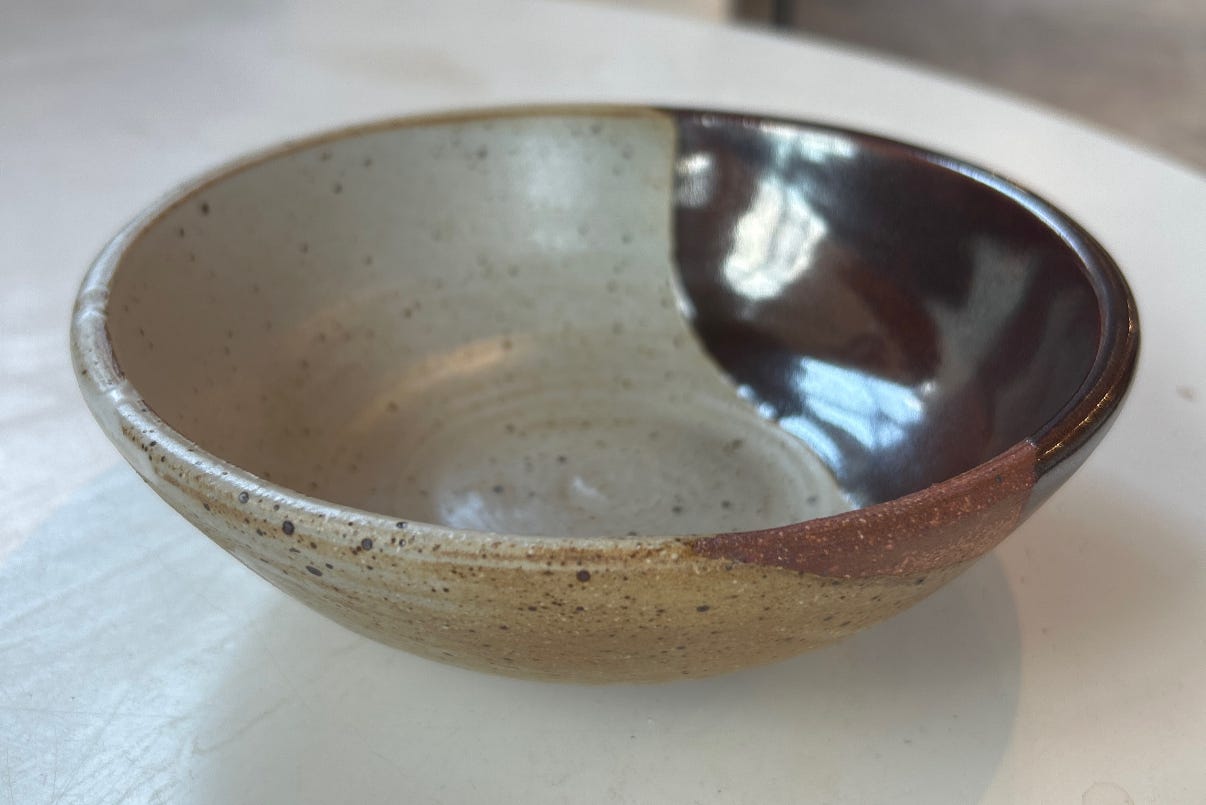
For around two years, I focused on vases. I decided I wanted to make pottery that looked like ancient Greek pottery. This quest caused me much heartache. It was difficult to make vase shapes with the proportions I wanted. Instead, my pieces would come out stubby or bottom-heavy. The handles would look weird.
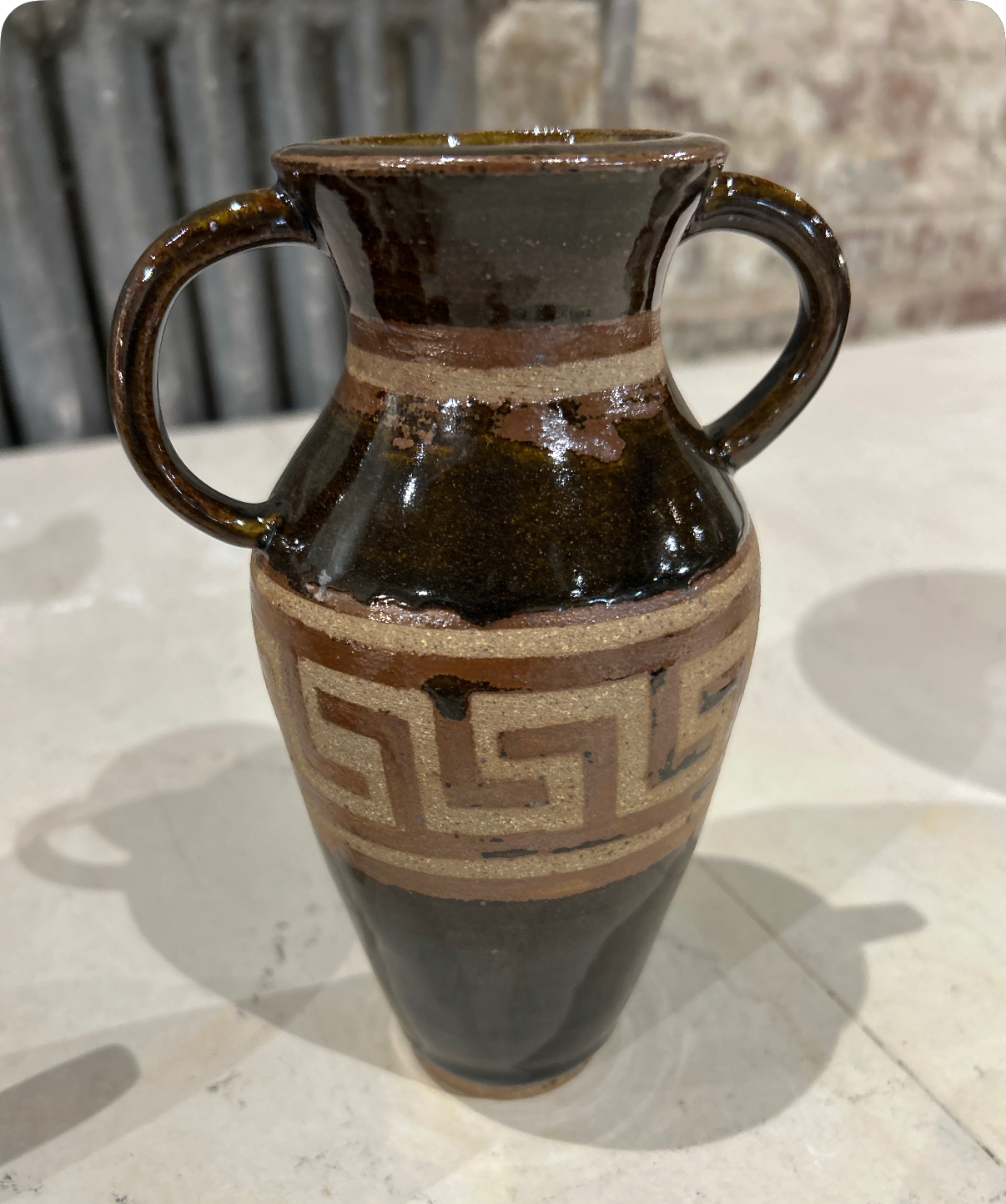
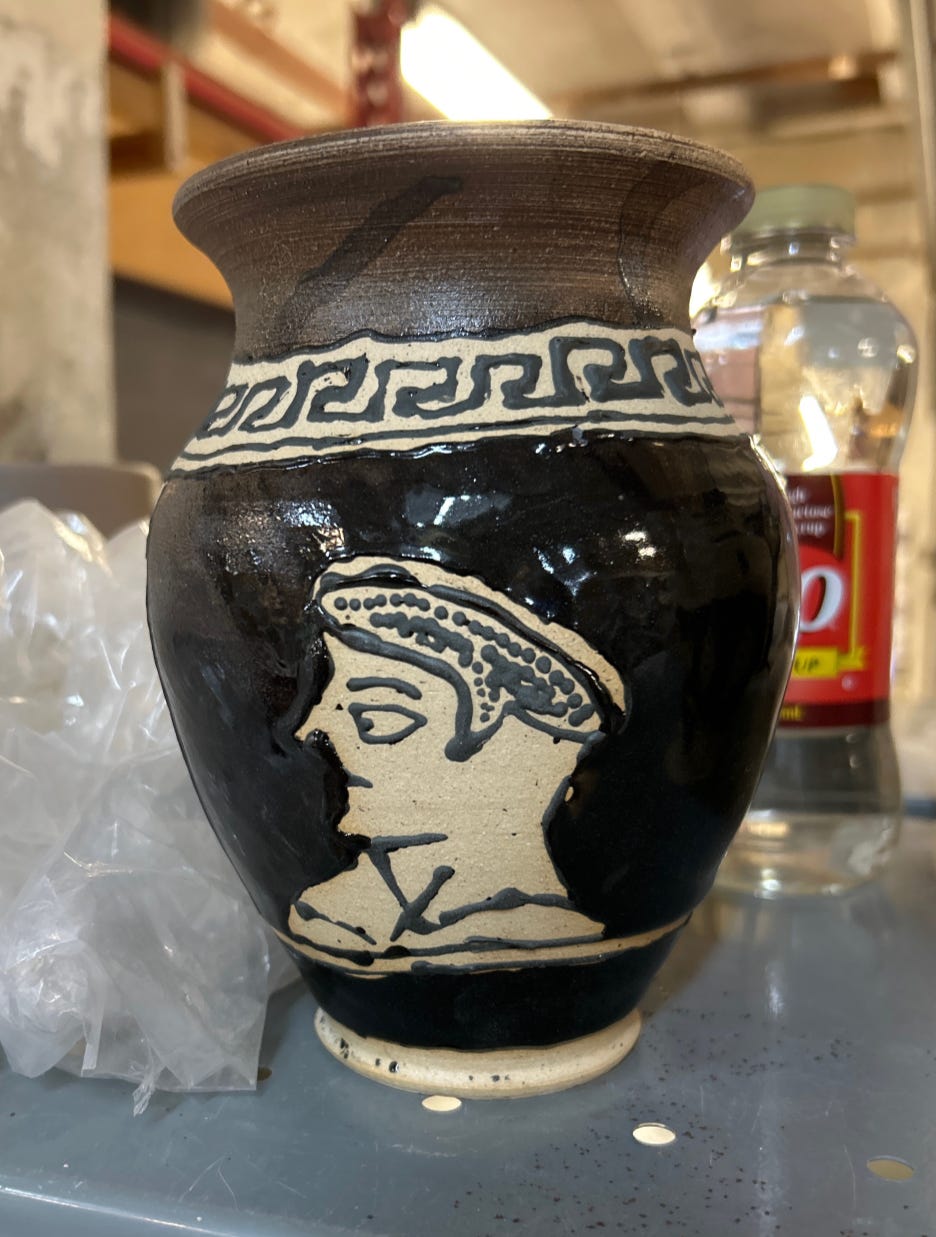
I struggled with surface decoration. So much of the appeal of ancient Greek pottery are the rich drawings on them. It became clear that I would either need to stick to geometric patterns, or I would need to learn how to draw.
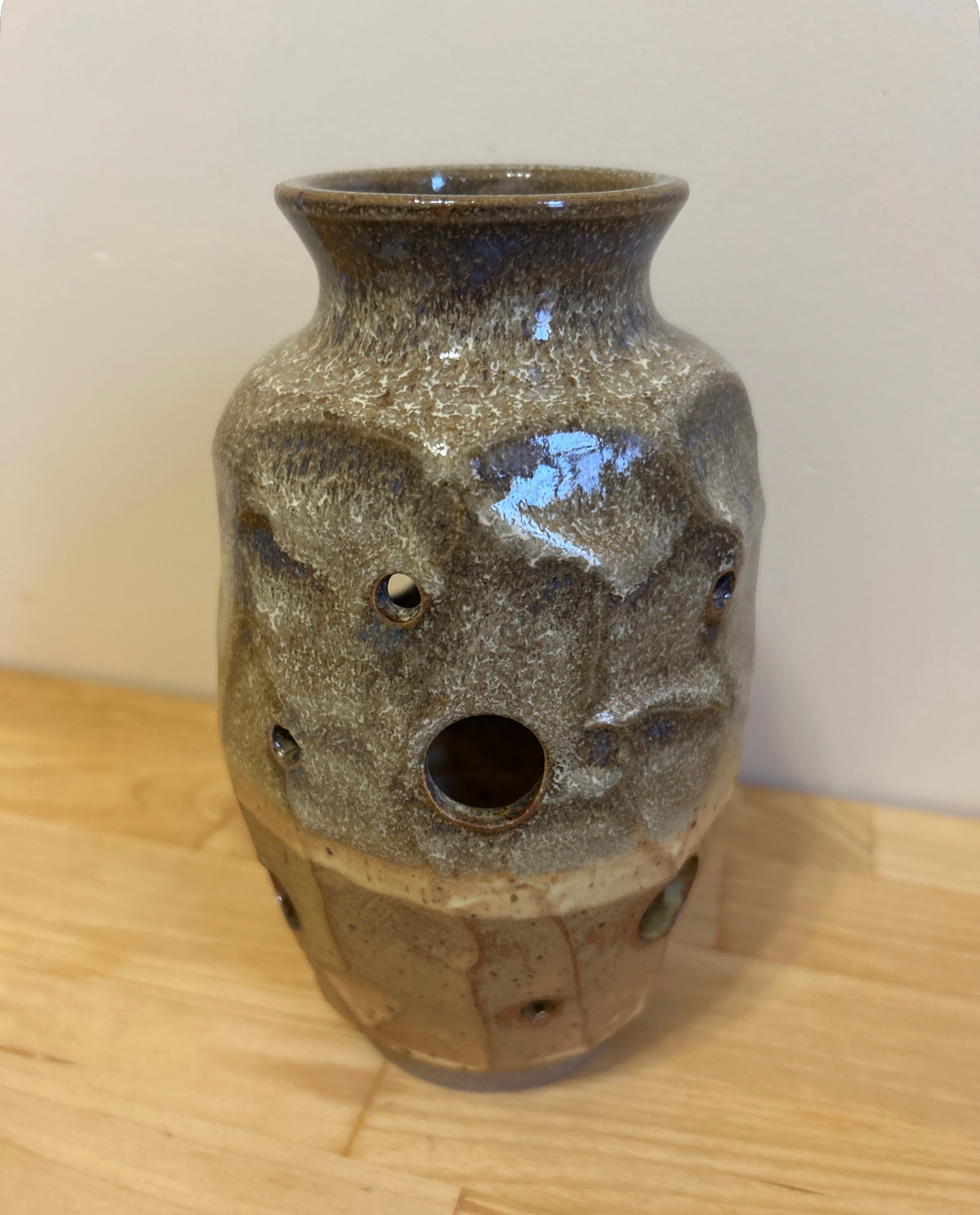
I started to notice that random experimentation, due to accidents or petulant irritation, were often more interesting or successful than my painstaking attempts to manifest. One day, I made a vase with walls that were too thick. I decided to “facet” the surface. I ended up cutting a hole right through the wall. Rather than throw the piece away, I started to play around. I punched more holes in the wall. I used a glaze combination I thought would be maximally ugly. The piece that came out, which I call “Evil Beehive,” is one of my favorites.
Even as my surface decoration attempts failed, I found that my constant practice at the same forms was paying off. I could make a cup without thinking about it.
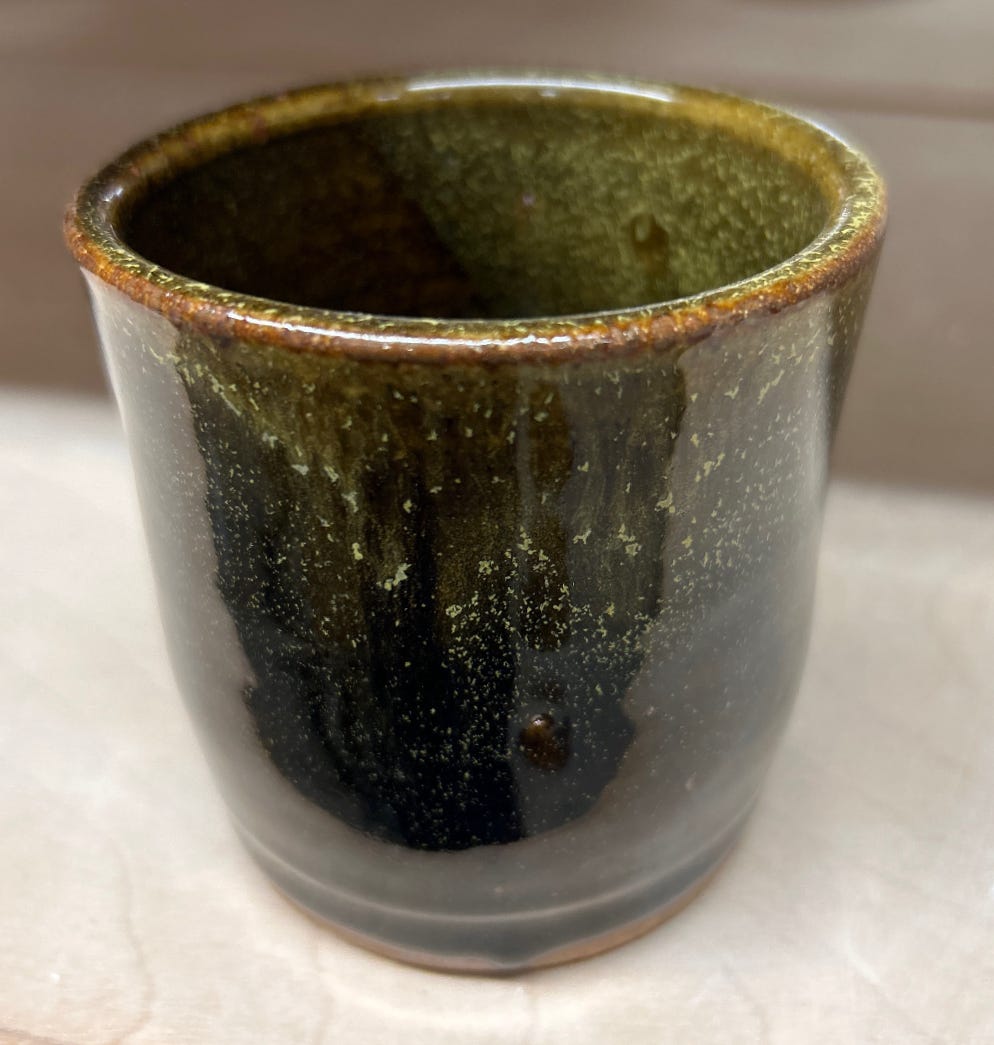
My studio ran certain kinds of workshops. One was a raku firing, where the pots are finished by firing in an open-air flame, basically a flamethrower inside a trash can. The only workshop with opening was a month away, and I threw together a bunch of vases in the minimum possible time. During the workshop, the coordinator needed to fill the garbage can over and over. She started asking for pieces from “the guy who makes the narrow vases.” It was music to my ears. After a year of effort, I wasn’t making lumpy, dumpy vases. I was making narrow, elegant ones.
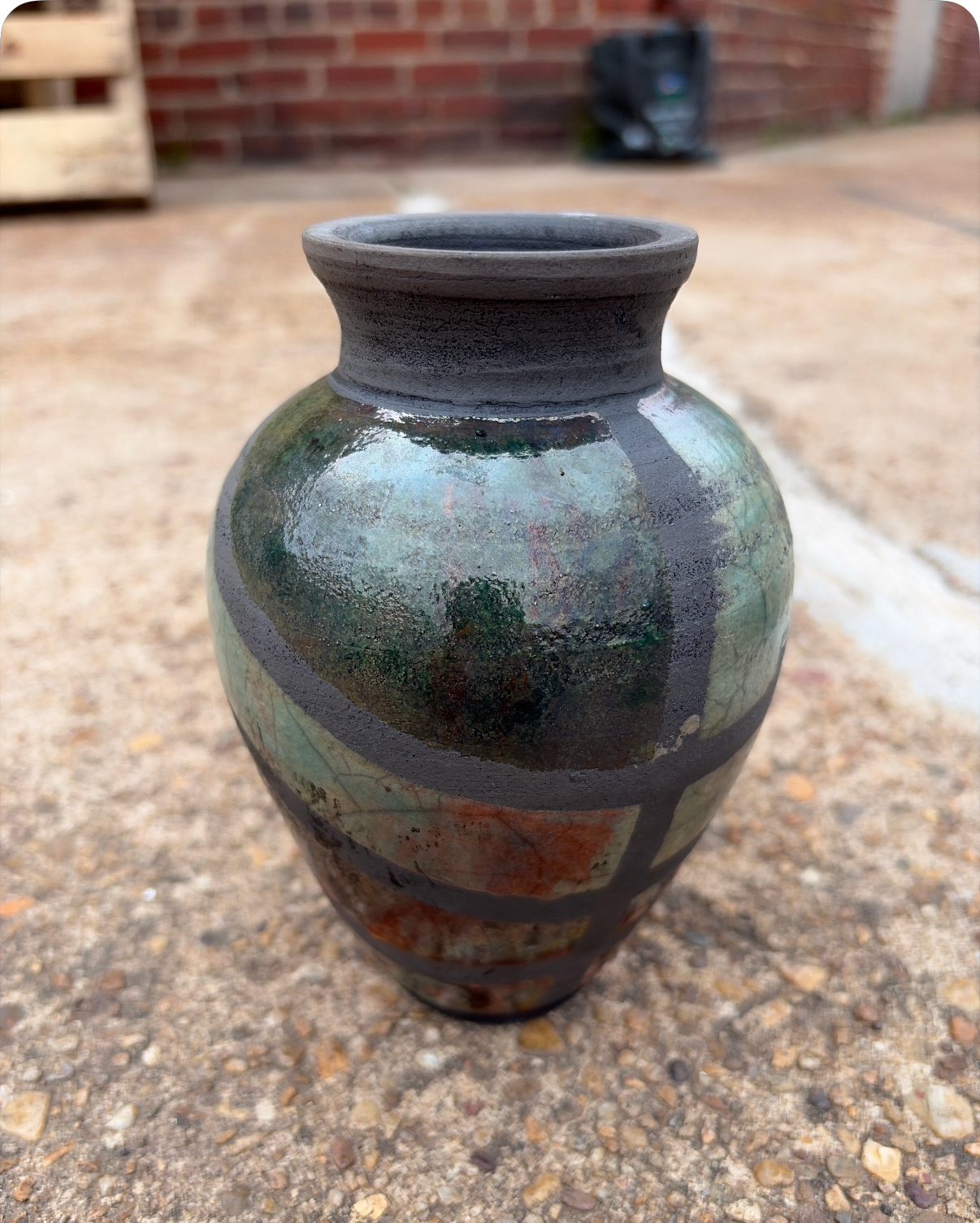
When I went to Japan, I made sure to visit the Raku Museum. I was surprised to learn that, in Japan, “raku” means pottery made by the Raku family, specifically by Mr. Raku. There is only one Mr. Raku at any one time, and the title passes from father to son. The current Mr. Raku is Kichizaemon the Sixteenth. The Rakus mostly make a single kind of bowl, used for tea ceremonies. They are misshapen and lumpy and weird. I spent an hour and a half in the small museum. I would look at every piece, mutter an obscenity, put my face in my hands, and then try to make sense of how something could be so ugly and so perfect at the same time. I had a very special experience in that museum, one that was only possible because of how I had studied the form.
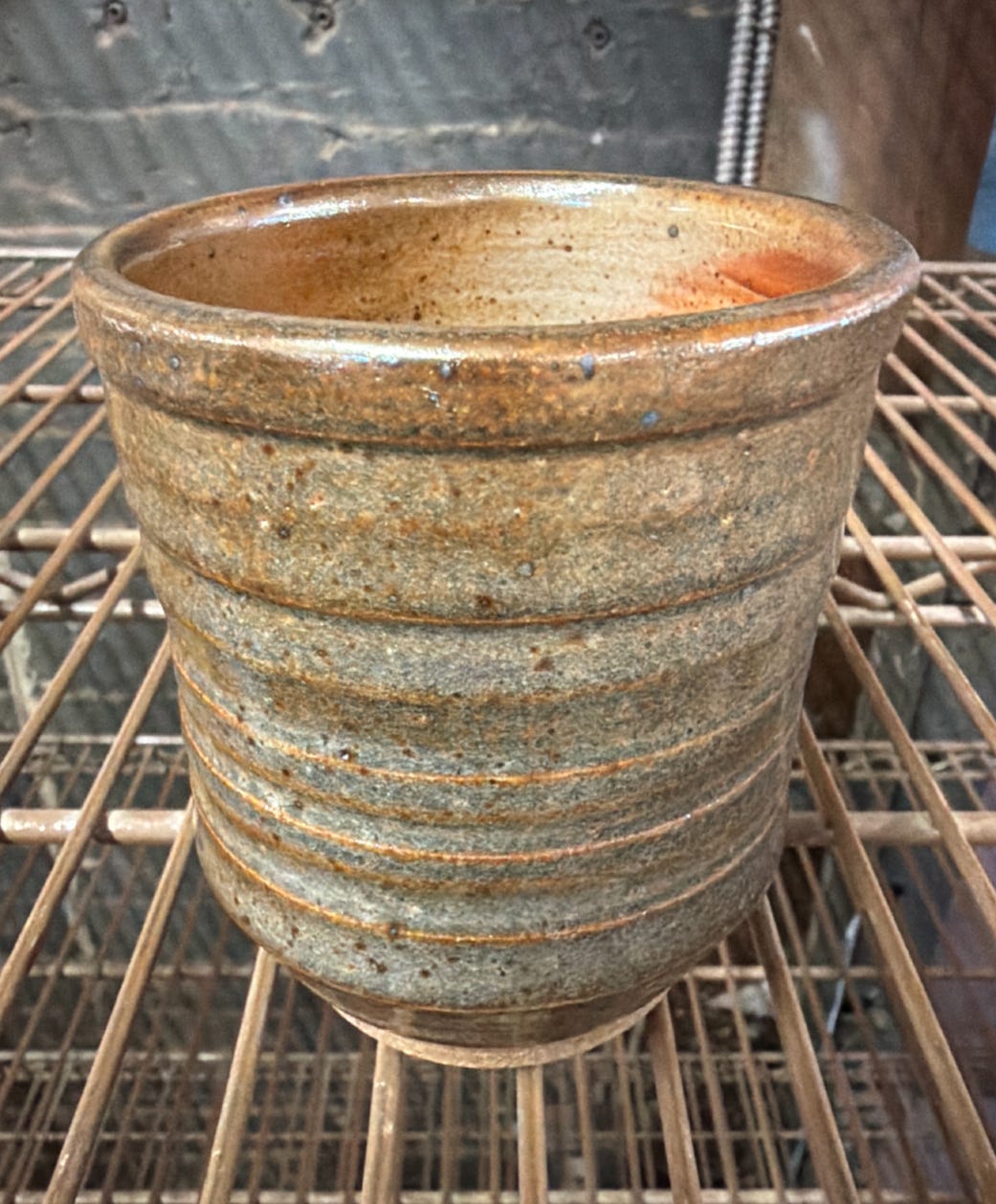
When I went to the Orkney Islands, I spent a lot of time looking at the Neolithic pottery. I was interested in the kinds of zigzag patterns they put on their bowls. I went back to the studio and tried to replicate it. Finally, after more than four years of craft, I was starting to do art. I was saying something. I was combining archaeological inspiration with enough liveliness to show that my pieces were made by a human being.
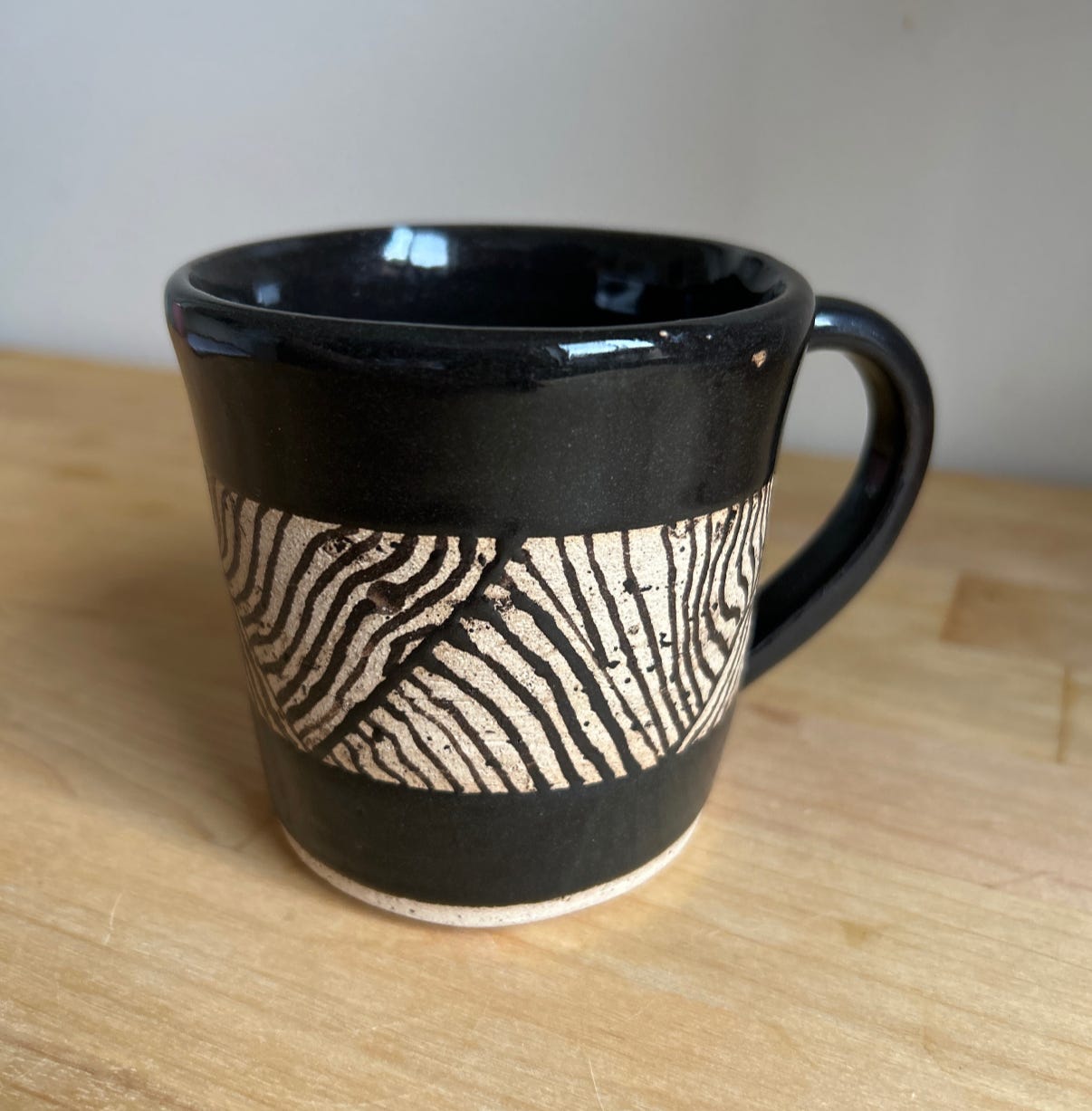
When the government shut down, I took an impromptu trip to Berlin, where I spent as much time as I could in archaeological museums. (This is the trip when I got mad about museums.) One museum has all the artifacts that Heinrich Schliemann dug up when he discovered the location of ancient Troy. (Schliemann was particularly delighted to find, deep underground, a layer of ash that could be explained as the Greek sacking Troy.) Beneath Bronze Age1 Troy, Schliemann dug up Neolithic artifacts, including a donut with three pipes coming out of it. I was transfixed by this object. Five thousand years ago, someone made a donut with three pipes coming out of it, and we have almost no idea why. I went back to the studio and decided I needed to make one.
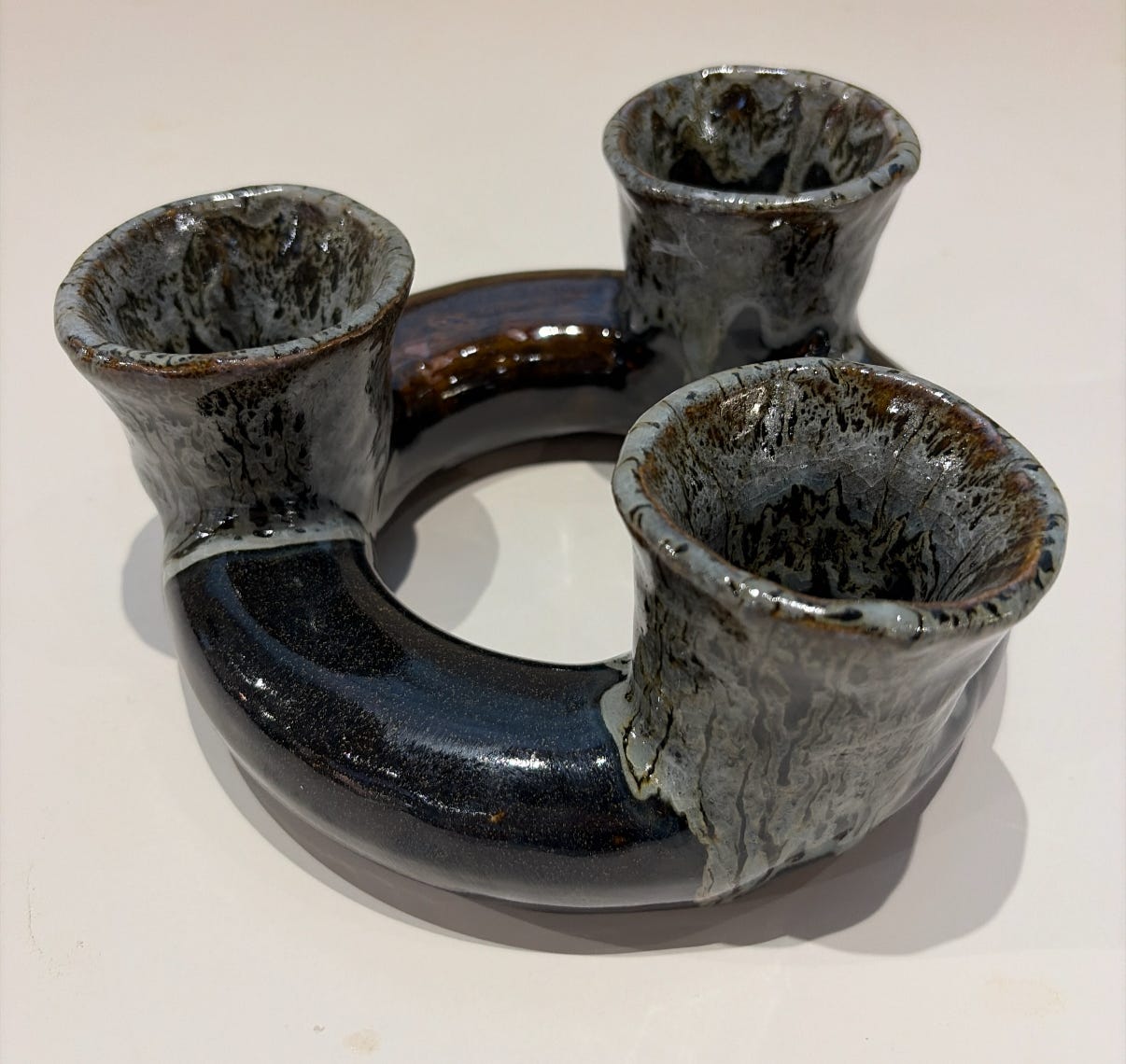
Every ten weeks, my pottery teacher would have her students select a piece, and we would all critique each others’ pieces. I got constructive critiques on The Trimpet: it should really have feet, or a carrying handle. The wheel-thrown, perfectly cylindrical donut contrasts too strongly with the clearly hand-made shape of the pipes. But overall the feedback was positive. One student called it “the most unhinged thing” they had seen in the studio. That made me very proud.
John Ruskin, foremost art critic of Victorian England, thought that everyone should learn to draw, not so that they could be artists, but so that they could better appreciate their world in general and good art in particular:
[A]n amateur’s drawing is always wholly worthless; and it ought to be one of our great objects to make the pupil understand and feel that, and prevent his trying to make his valueless work look, in some superficial, hypocritical, eye-catching, penny-catching way, like work that is really good.
If, therefore, we have to do with pupils belonging to the higher ranks of life, our main duty will be to make them good judges of Art, rather than artists […]
While I did make a few usable kitchen objects, Ruskin is right, that the primary effect of my five years of study was to be able to appreciate good work when I see it. It is an interesting and joyful experience to go to a museum or a farmer’s market and see good pottery, just as it is an appalling chore to walk through a stuffy studio full of uninspired, kitschy junk that other people think is good.
For our world to become richer and more interesting, we must study and learn. You get out what you put in.
No, but seriously. “Yes, Penelope. I am the people from the sea. Our age of bronze is collapsing, and maybe I couldn’t bear to see the ruins of what I’d done.” I’m still nauseous thinking about this writing.