

When I was a postdoc at the Harvard Chan School of Public Health, I applied for an exchange program between Harvard Chan and Kocaeli University in Turkey. I had heard about the program from another postdoc. I was excited by the idea of setting up some academic collaborations with Turks. My fiancée was Greek-American, and it would be very convenient if I could have routine, professional reasons to travel to the Aegean, where I could just incidentally visit family.
I was one of three accepted applicants. The other two were a Pontic Greek, whose ancestors were expelled from Turkey during the 1923 population exchange, and a Finn. We would visit the university, give talks, and meet faculty and students. I was hazy on the details, but I didn’t ask too many questions. Mediterranean culture lends itself to handshakes and wait-and-see’s.
We arrived at Istanbul Airport and were greeted by Tuğçe, a student from Kocaeli. She guided us to our transportation. I had expected to ride in a simple taxi or someone’s personal car. Instead, we were pointed to a gleaming Mercedes. The driver stepped out. He was wearing a black suit, black tie, and white shirt. He was friendly but professional. He loaded our luggage, opened the back door, and gestured us in. This, Tuğçe explained, was the car and driver of the dean of the medical school. The dean wanted us to have an appropriately comfortable journey.
Three hours later, the highway went over a ridge and revealed the lights of Kocaeli, a city of one million people, the twenty-third-largest city and tenth-largest metropolitan area in Turkey. In terms of absolute population and relative ranking, Kocaeli is comparable to Cleveland.
It was dark by then, so we couldn’t see for ourselves, but Tuğçe explained how the city lay in a plain between the Gulf of İzmit to the west, Lake Sapanca to the east, and hills to the north and south. We drove down the ridge, into the plain. We kept the downtown on our right. We transitioned from the highway to a suburban artery road lined with furniture stores and car lots. Then we turned onto a smaller road leading up the hills on the south side of the plain.
“Where are we going?” I asked. I was looking behind us, at the bright lights of the city, and in front of us, at a dark hillside.
“Oh, to the university hotel,” the student explained. “It’s in Kartepe. Very nice area. You’ll like it.”
Now we were up a hill, in the rural outskirts of the city. There were few buildings. Most of them were unlit. We turned into a fenced compound. It became darker still. We drove down a tree-lined driveway, toward the lone visible light. It was the hotel lobby entrance.
The driver took out our luggage, and we thanked him, expecting he would drive off. Instead, he shooed us inside. He was going to take Tuğçe with him, and she wanted to make sure we were settled first.
It looked to be a big hotel. It was hard to tell in the dark, but I thought it had five floors and multiple wings. The lobby seemed suitably large. Again, it was hard to tell, because there were only two lights on. One hung over the reception desk, where a young man stood with a cheery smile. The other light hung over a table and some couches in a corner.
The receptionist greeted us with one phrase in English. He then switched to Turkish and talked with Tuğçe. The three postdocs were handed keys.
“So, we will see you tomorrow?” Tuğçe asked.
“Wait,” I said. “Can you tell us where to get dinner around here? We haven’t eaten anything since the airport.”
Tuğçe looked puzzled and turned to the receptionist. They conferred.
“You shouldn’t leave the hotel,” she said. “We can order you food. Would you like pide, or lahmacun?”
We turned to one another. I didn’t know what pide or lahmacun were, nor did the Finn. The Pontian had a guess but wasn’t sure.
“Are those the only two choices?” I asked.
Tuğçe frowned. She conferred with the receptionist again. They went back and forth with each other a few times. She turned back to us. “Yes,” she said.
We chose lahmacun. Tuğçe said goodbye. The receptionist gestured toward the stairs. We were to go to our rooms.
We started climbing. We compared room numbers. We were each on different floors. The stairwell was only intermittently lit. On the third floor landing, I turned off, and walked down a partly dark corridor, until I found my room. There appeared to be no one staying in this hotel except the three of us.
My room was neat and tidy, with big windows. I found that the lone electrical outlet was at the level of the floor, hidden under the bed, behind the dust ruffle. I went back downstairs. I found the Pontian and the Finn sitting on the couch under the second lobby light.
We were all deeply confused. We were also loath to have a frank conversation. It seemed the receptionist didn’t speak much English, but it was perfectly silent in the lobby. If we spoke normally, he would hear every word. If we whispered, he would know we were whispering, which would have been worse. I felt like a hostage, not one trapped beneath the muzzle of a bank robber’s gun, but more like the son of a nobleman, sent to live in the king’s household, to be well-treated, but kept within close reach, in case I needed to be used as leverage.
The quiet was broken by the buzz of a man on a scooter, delivering the lahmacun. It turned out to be flatbread topped with minced meat and vegetables, like pizza but with lots of spices but no sauce or cheese. The receptionist said goodnight and disappeared. The three postdocs ate together, huddled in the small pool of light, and wondered what we had gotten ourselves into.
I was tired and fell asleep easily. I awoke with a start to loud noises. At first, I thought it was gunfire. When I listened more closely, I could hear music too. I told myself there must be a wedding with fireworks across the street. Or maybe a wedding with joyful gunfire. I comforted myself with the thought that it was very unlikely that anyone with ill intentions would think to enter this dark hotel, ascend to the third floor, go down a dark hallway, and stumble into the lone occupied room.
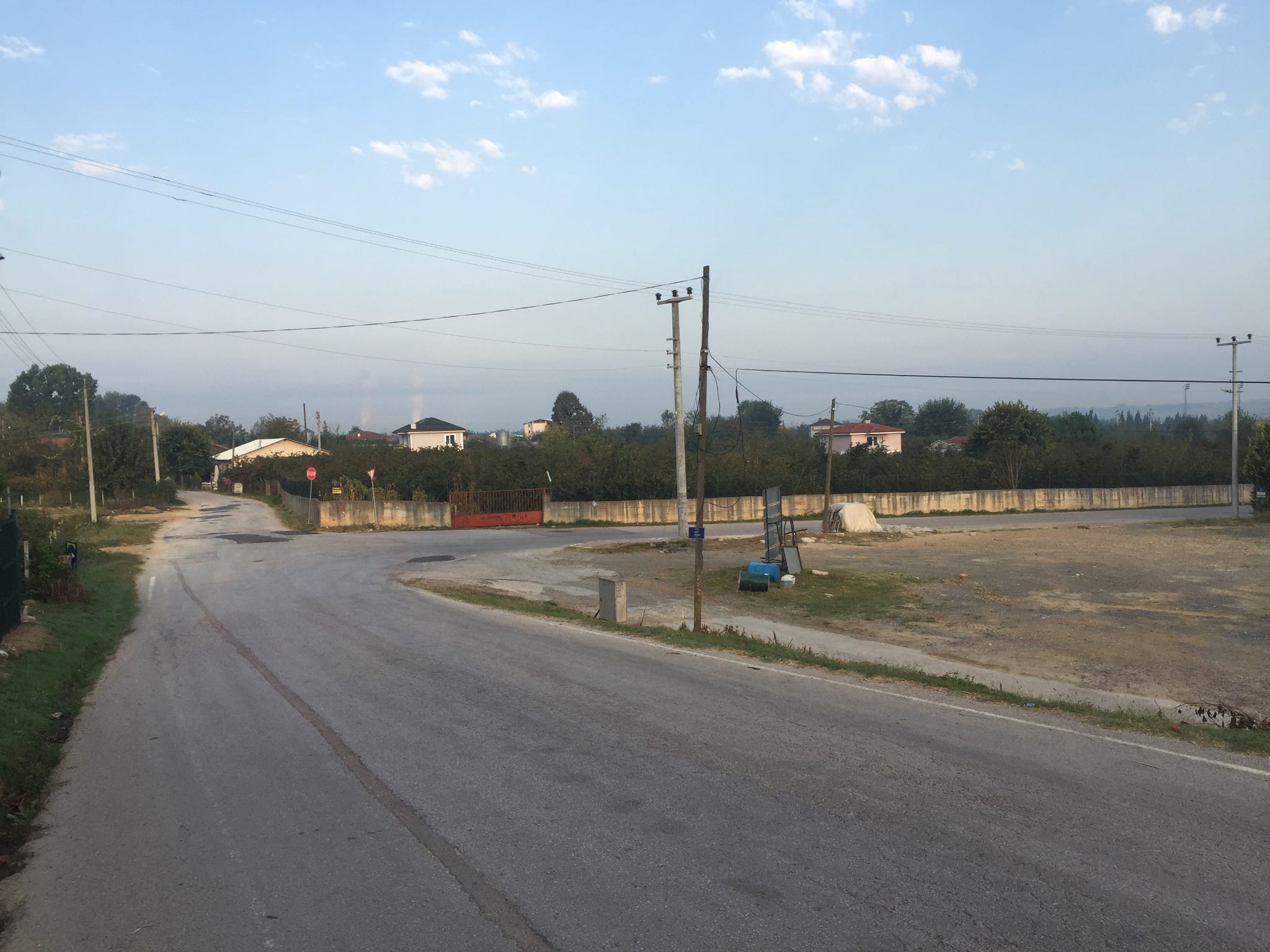
I got up the next morning for a jog. The buildings I had seen on the surrounding roads the night before were small houses and little agriculture storage sheds. I picked up a stick in case I needed to fight off any stray dogs. Instead, I came across some old ladies waiting for a bus. I discarded my stick. Up the street I found a corner store and bought a candy bar. The Finn had explained to me that he was here in Turkey because his boss was Turkish and, incidentally, partial heir to a family candy company fortune. It wasn’t hard to find something in the store to buy with his name on it.
I returned to the hotel, showered, and went down to the lobby. The Pontian and the Finn were there too. The receptionist appeared and grandly threw open a huge door we hadn’t seen the night before. It revealed a large breakfast room. There were freshly cut tomatoes, cucumbers, cheese, multiple baked goods, eggs, yogurt, coffee, and juice. There were a few ladies in a back room, chatting and cutting up more vegetables. It was bright and sunny, and we could see the grassy hotel grounds. I wondered if I had overreacted the night before, and the whole experience wasn’t as foreboding and weird as we had made it out to be. I also wondered if the student and receptionist had noticed how put off we were, and if this breakfast was an attempt to appease or impress us.
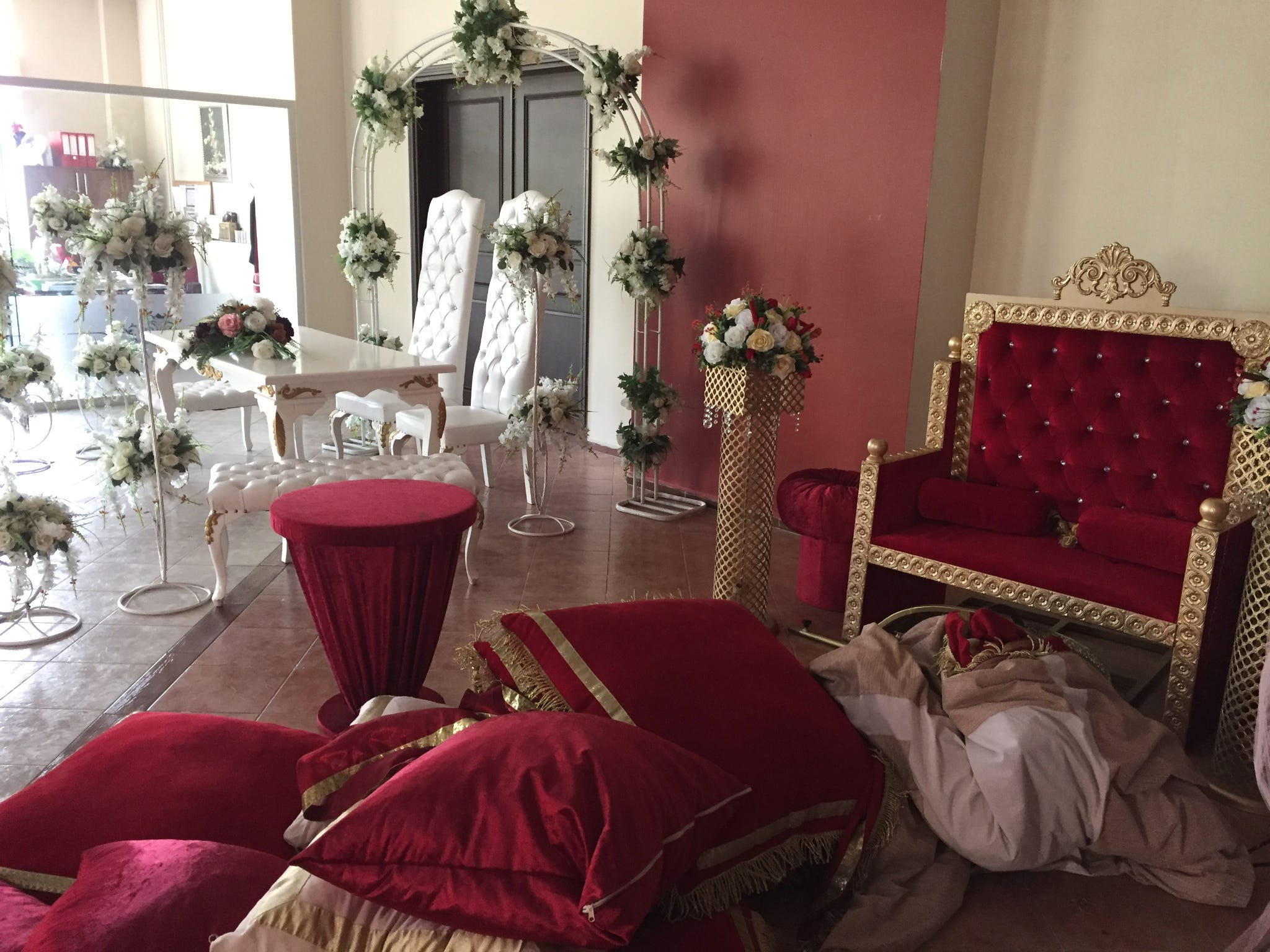
The dean’s driver picked us up and drove us to the university, on a ridge on the north side of town, at least a half hour away from the hotel. We were scheduled to meet the dean, but he was busy. Instead, our handler, a woman with an air of authority but no particular office I could make sense of, said she would take us downtown. We got in her car and drove two minutes to another building, where a man was waiting. I wondered if we were going to have another guide. To my surprise, our handler got out of the car, walked to the passenger side, and sat in the passenger seat. This man got in, on the driver’s side, and started driving. When we arrived downtown, the three postdocs and İpek went for a walk. The driver waited with the car. I wondered if car theft was such a problem that it was important to have someone wait with your car, or if this was a display of prestige, showing us that İpek was a woman of status, who had a driver.
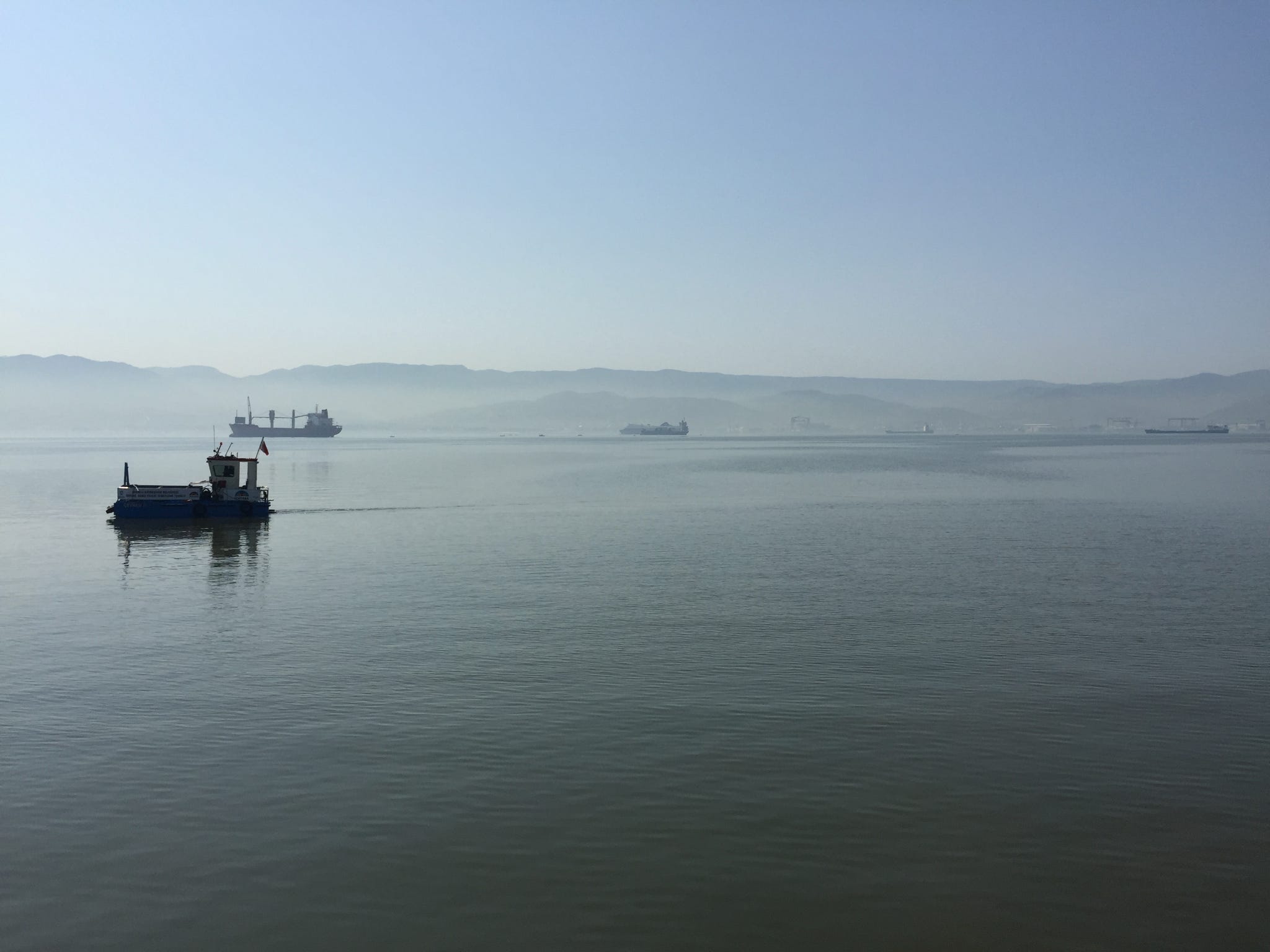
We saw the Gulf, walked through the city’s central park, and drank a juice. I talked to İpek, trying to understand what this program was about. It was clear she thought it was going well, and wanted to “expand” it, but I remained unclear about its goals and what it had accomplished so far.
We returned to campus for tours of some laboratories. The incentive structure here was very different from what I expected. In my experience, university professors were in a constant struggle to recruit funding and students, then use those resources to produce the research products that your colleagues would find most interesting, which in turn would improve your chances of getting money and students. Here, the career progression was different. Even a few publications were sufficient to brand a professor as “having published,” at which point they would devote their attention to other things. Kocaeli did not receive substantial research grants from the Turkish government. Instead, professors were trying to build their own equipment and materials, and use them to deliver more sophisticated treatments at the hospital. The government discouraged scientists and doctors from importing any materials and encouraged homegrown solutions. Import taxes were high.
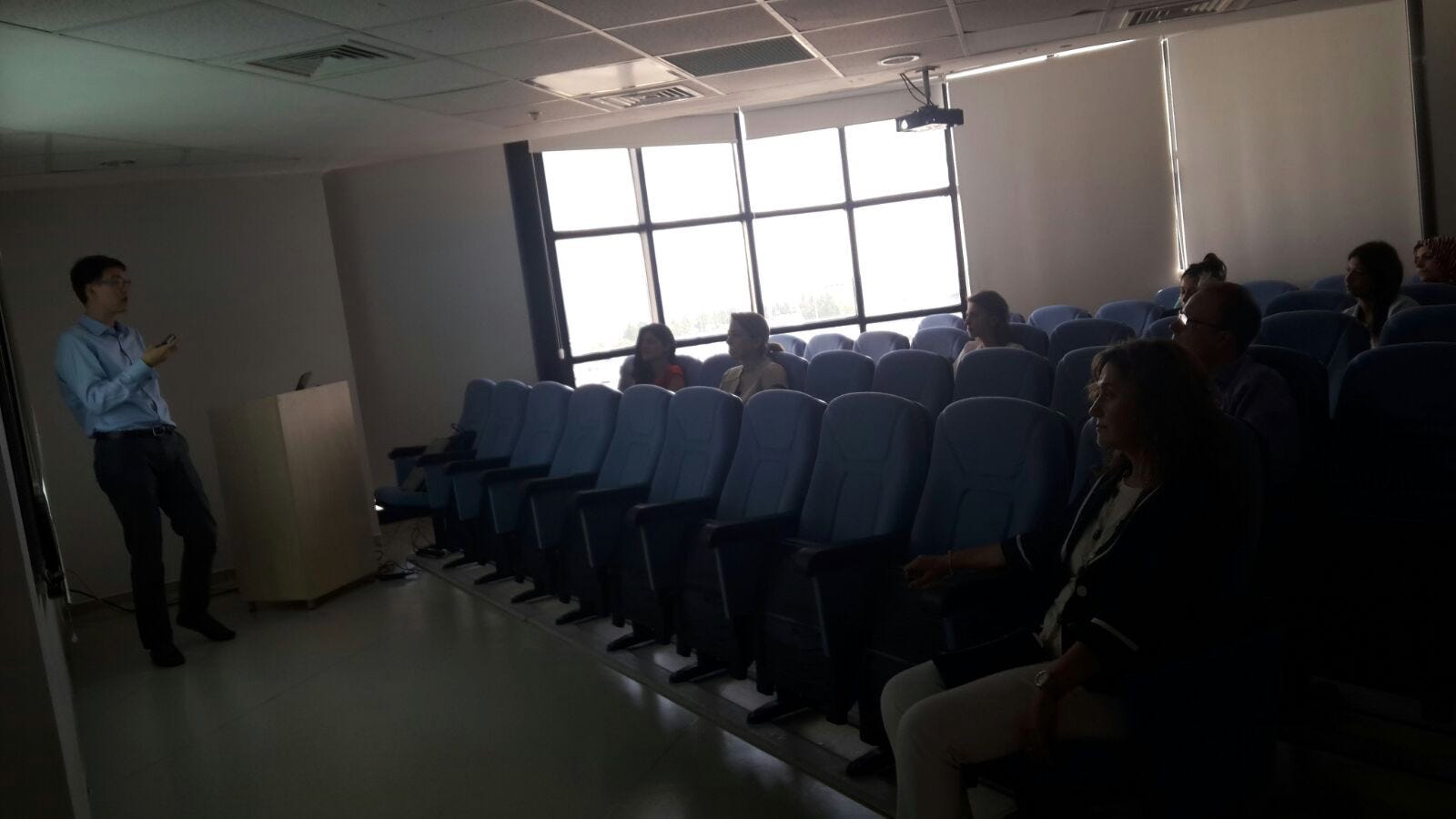
I was scheduled to give a seminar the next morning. İpek brought us to a lecture room off a quiet, second-floor corridor. The only people there were the student welcoming committee. As the scheduled time approached, İpek became agitated. She told me to wait, “because not everyone was there yet.” She left the room for a few minutes and then returned, ushering a group of confused-looking students into the room. It seemed fairly clear they had been intercepted in a busier corridor and forced to come to listen to my talk. A different handler, a person who I was told would be my “mentor” for this exchange, introduced me. Afterward, the Pontian and the Finn asked some questions. None of the Turks did. I never saw the “mentor” again.
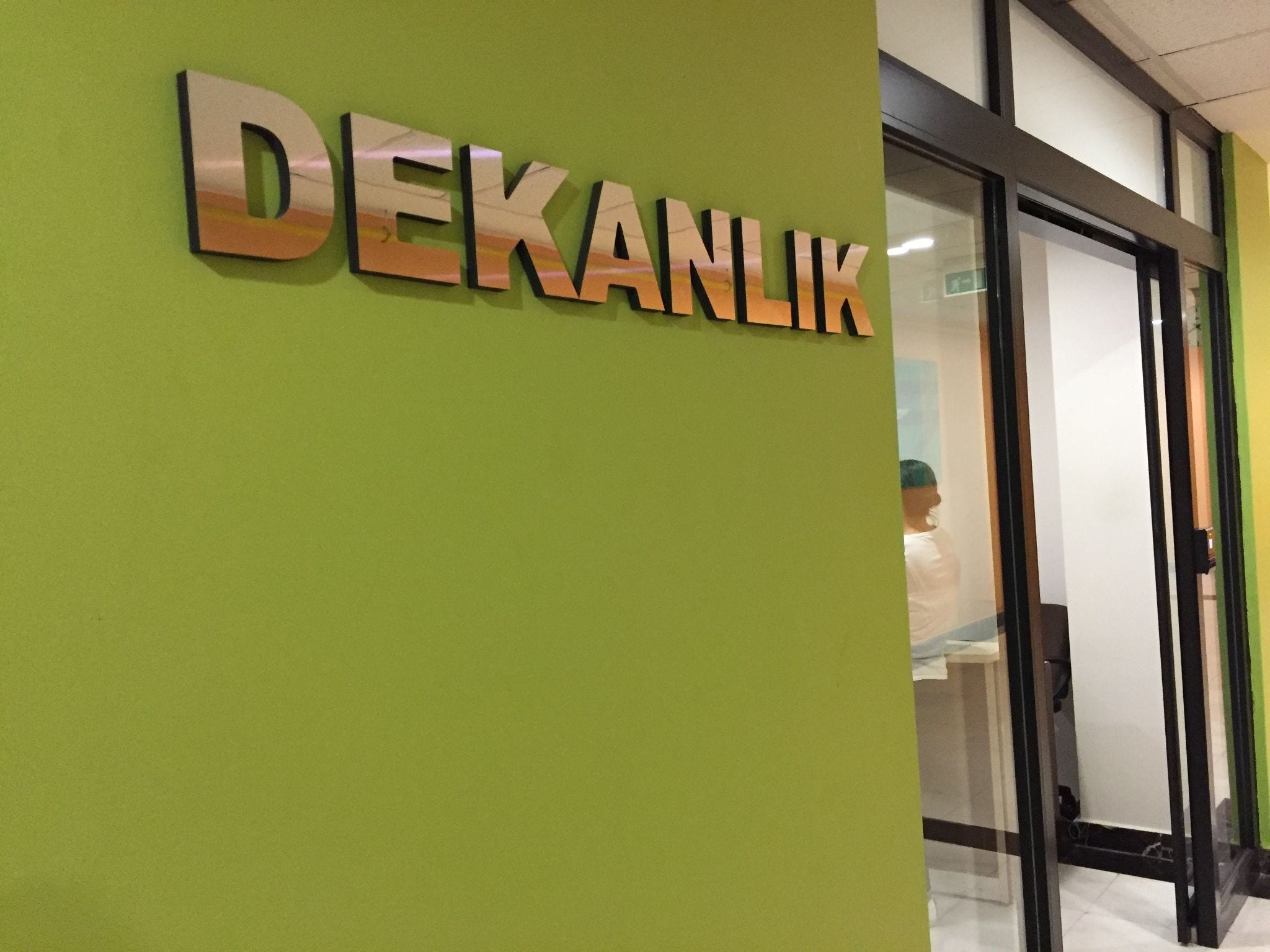
The next day, we were taken to meet the dean. The passageway to his office was in the main academic building, off the main hallway, up three short marble steps. The word DEKANLIK was written on the wall, in gold letters. Dekan is the Turkish word for dean, and dekanlık is prosaically translated as “dean’s office.” But I was reminded of how the Ottoman Empire was divided into pashaliks, each ruled over by a pasha, roughly equivalent to a European duke. The pashalik was the pasha’s domain. I saw DEKANLIK and read THE DEANDOM.
The dean sat behind an enormous desk. The three of us were seated, side-by-side, facing him. İpek and one or two other handlers fanned out around us. A dekanlık functionary emerged from a side passage, asking if we wanted coffee or tea. Business could not begin until coffee or tea was served. In the meantime, we sat silently.
The dean was a burly man with dark hair, bushy eyebrows, and a big moustache. He wore a white collared shirt. I found the silence uncomfortable. Not wanting to stare at his face, I examined his hands. They were clasped, resting on his desk. I noticed that his shirt sleeves were puffed out in a strange way, like he was in one of those blow-up suits that people wear at Halloween or in used car lots. I wondered if a superabundance of arm hair was providing the positive internal pressure.
The coffee and tea came. We all took a few sips, except for the dean, who clearly was served much more tea and coffee that a reasonable person could be expected to drink. The speeches began. İpek made some introductory remarks, then gestured to each of us in turn.
I was first. Among all the Turkish, I recognized my academic credentials: Williams College, Cambridge Üniversitesi, Em Eye Tee, Harvard. Since I had entered his office, the dean had barely moved. Now his mustache wiggled, and he produced a low murmur. İpek leaned down to me. She put her mouth close to my ear, but faced off at an angle, as if she were talking to herself. “The dean is impressed with your resume,” she whispered. “It is a good resume. Very prestigious.”
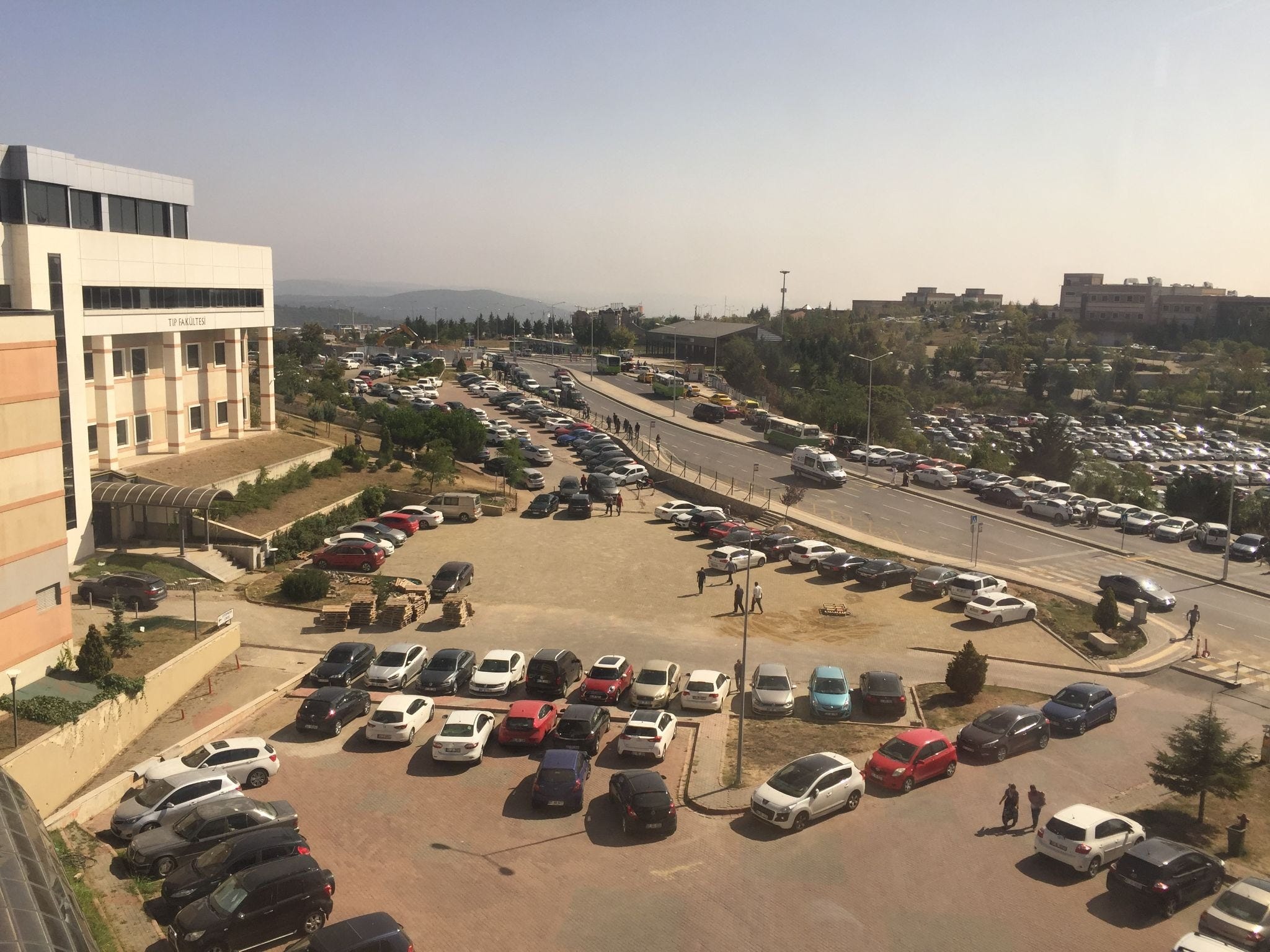
Toward the end of the trip, I started to put some pieces together. Among Turkish universities, Kocaeli was ranked thirty-third. Among US universities, this would be like UC Davis or Boston College. People at this institution had a lot to gain from any association with the Harvard name. US academics were, to my mind, straightforwardly motivated by money and publication. For them, an exchange like this would be considered successful if it produced fruitful research collaborations, or if it allowed the US institution to substantiate a claim about multiculturalism or scientific diplomacy that could be used in grantmaking.
The Turkish system, at least for universities in Kocaeli’s tier, was less obvious to me. Surely some academics advanced purely based on the prestige they gained from their scientific publications, but I suspected that most of them needed to garner multiple types of prestige. İpek, I learned later, was some distant family connection of the dean’s. I started to conceptualize her as a kind of “special advisor,” tasked with this special project of getting Harvard’s name attached to Kocaeli’s.
When I returned home, I wrote a short report about my experiences and suggested some ways to improve the program. Personally, it was a worthwhile experience. I got a free ticket to Turkey and saw a slice of Turkish academic life I would otherwise never have seen. But it could have been a much better experience, and I felt obligated to suggest improvements.
The program appears to still be running.