I am a federal employee, hired on a remote work agreement. I was placed in an office in 2025.
Relative to many colleagues, my placement is comfortable. I commute half an hour, by bike and subway, and on foot. I was assigned a cubicle, with a desk and chair. The internet works almost all of the time. My critiques of the in-office experience per se are insubstantial.
What depresses me are the office’s environs, University Town Center, a “planned urban center.” To my astonishment and horror, it is listed as historic.
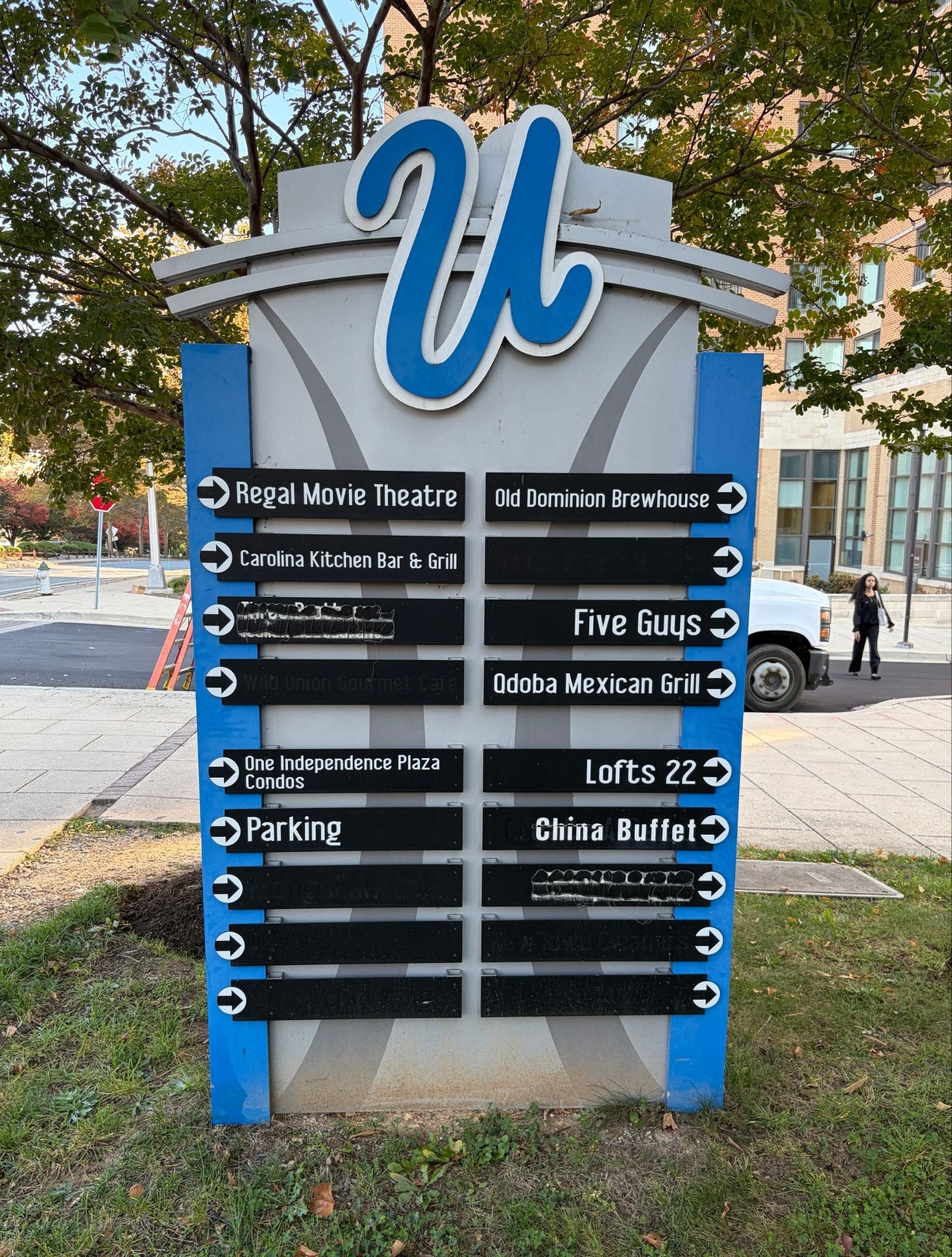
True ugliness is not the presence of something grotesque, it is the utter absence of beauty.
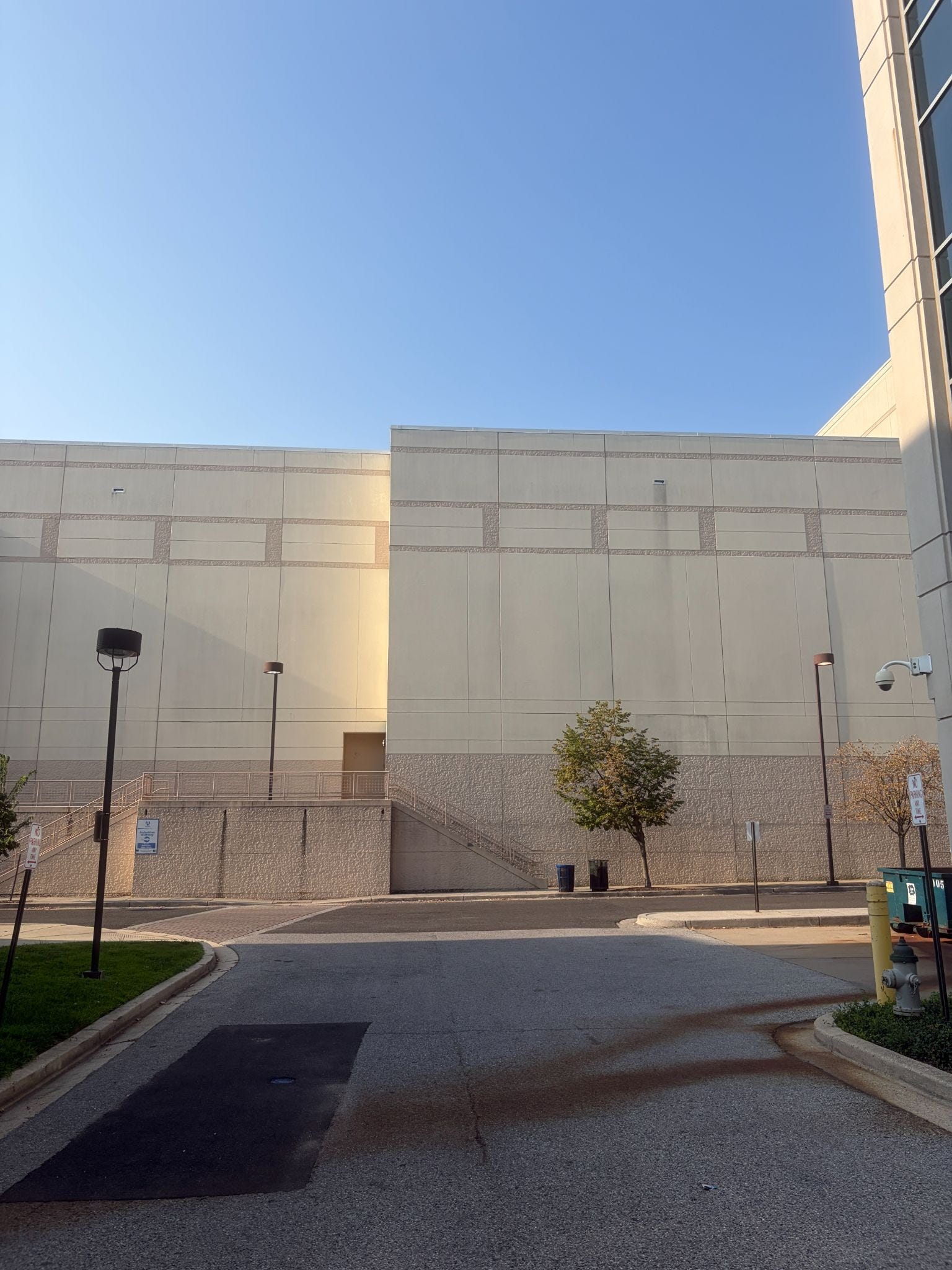
Everything is ordinary, so unremarkable as to dull the mind. Wabi sabi, it is not.
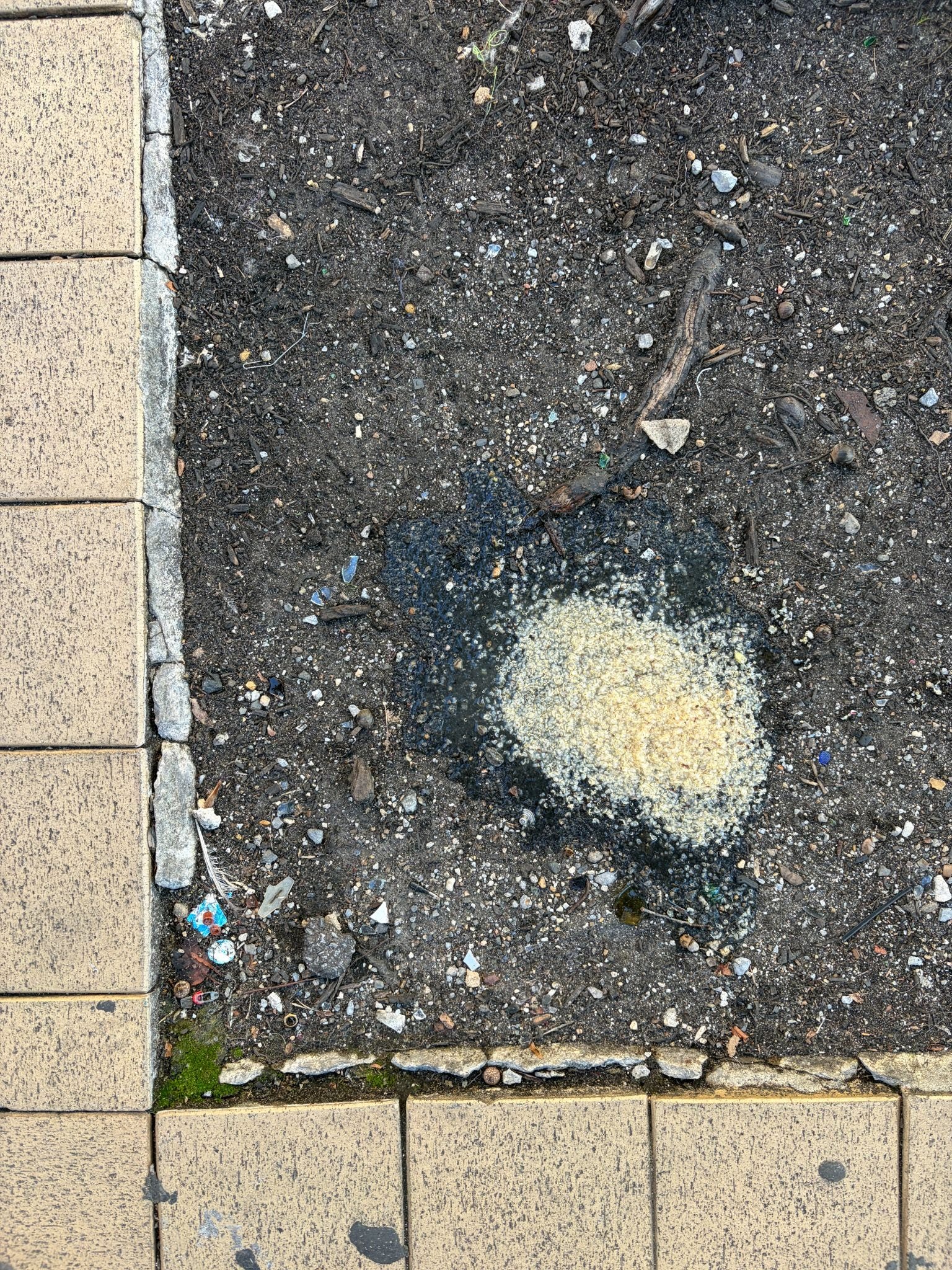
The most interesting things to look at are trash. I have nothing else to look at.
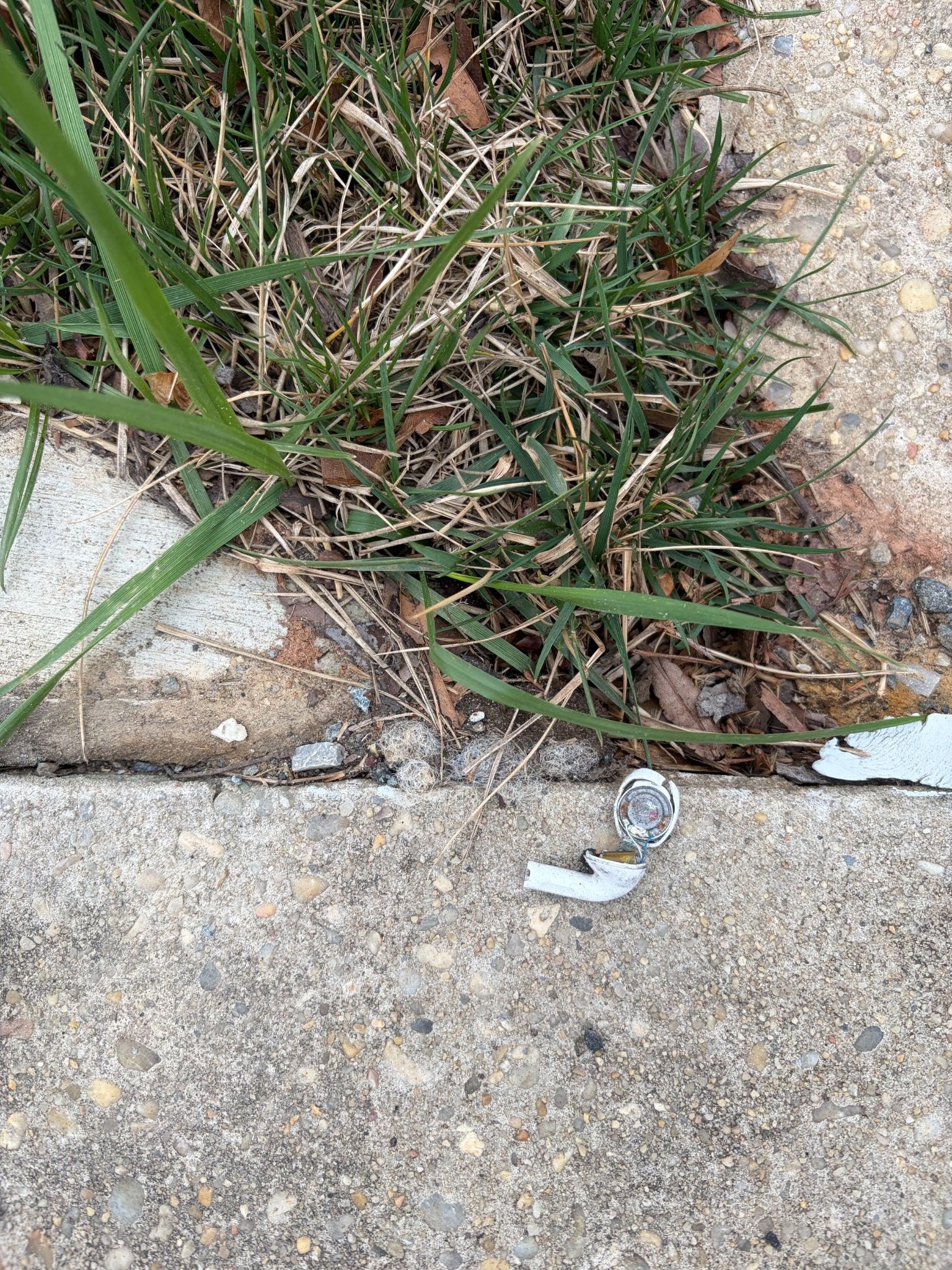
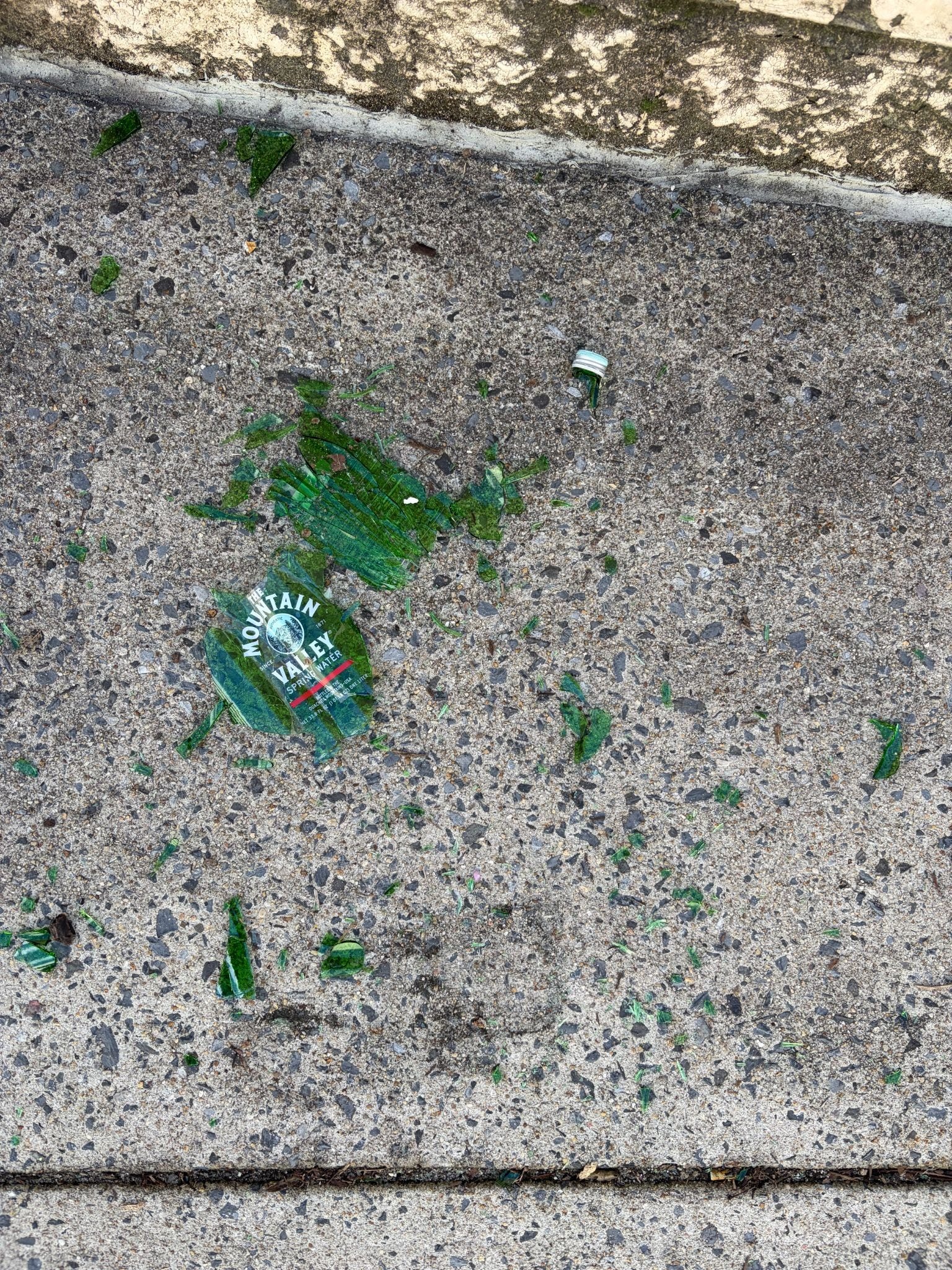
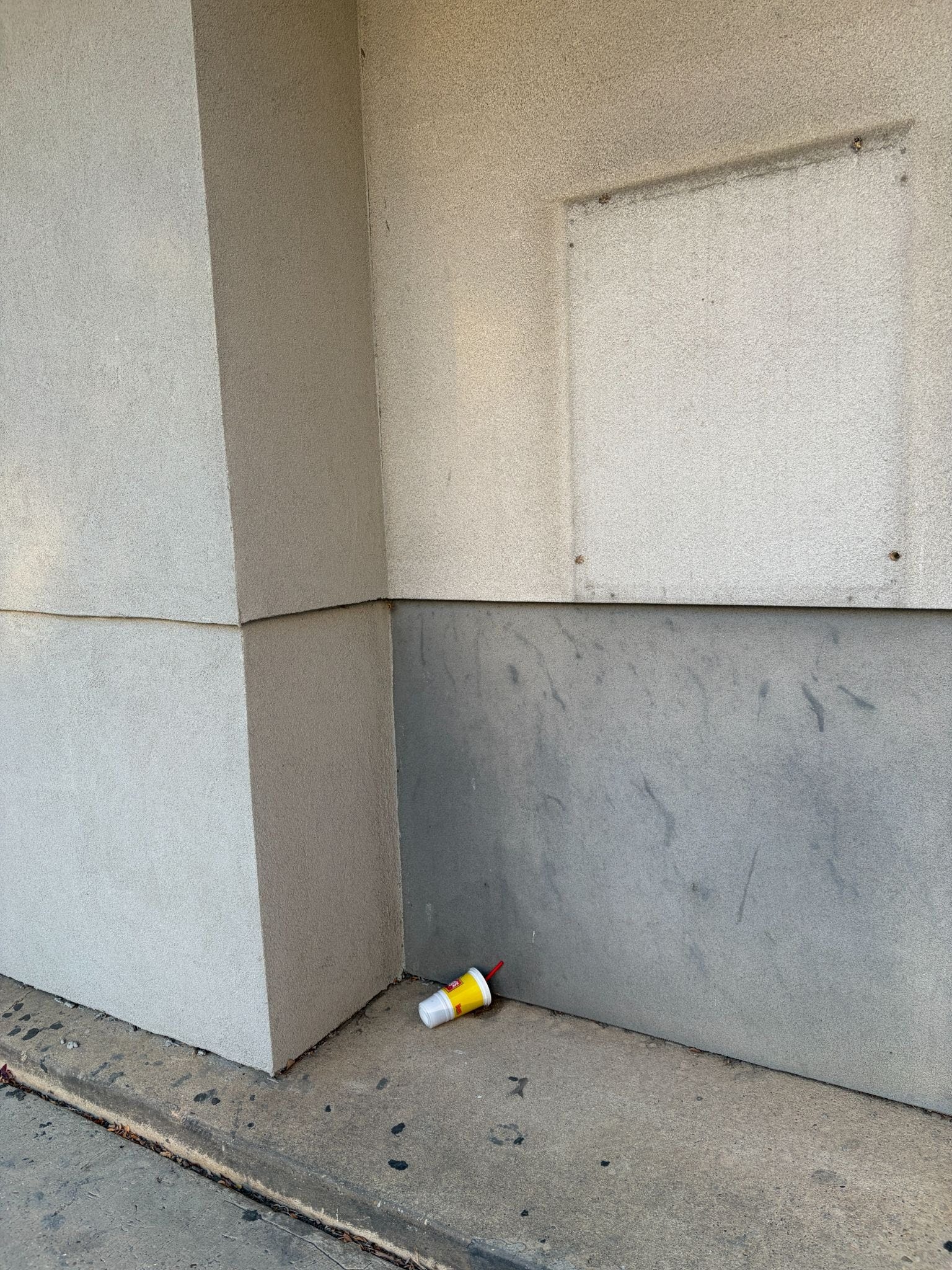
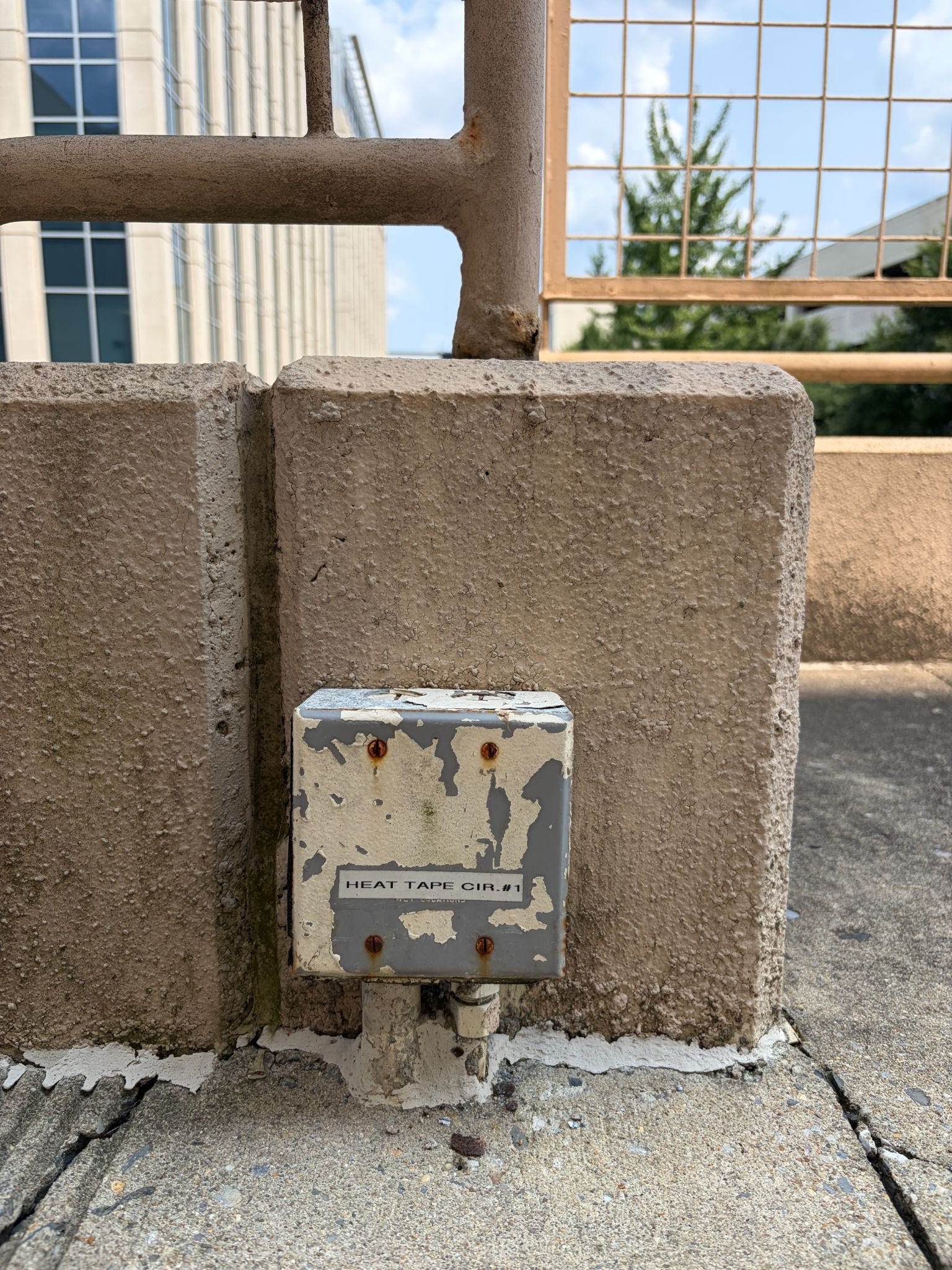
There are messages being sent, but I cannot decipher them.
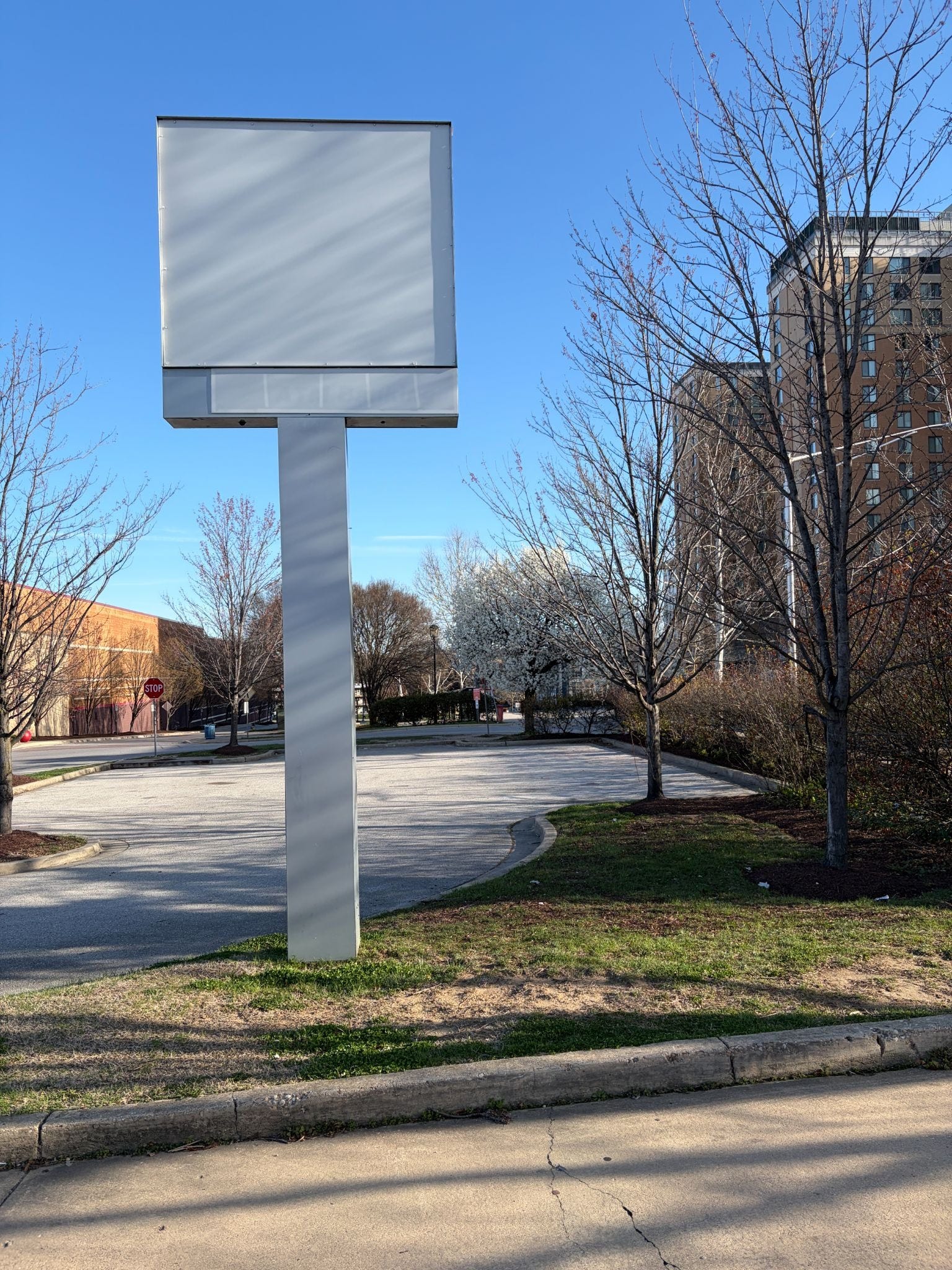
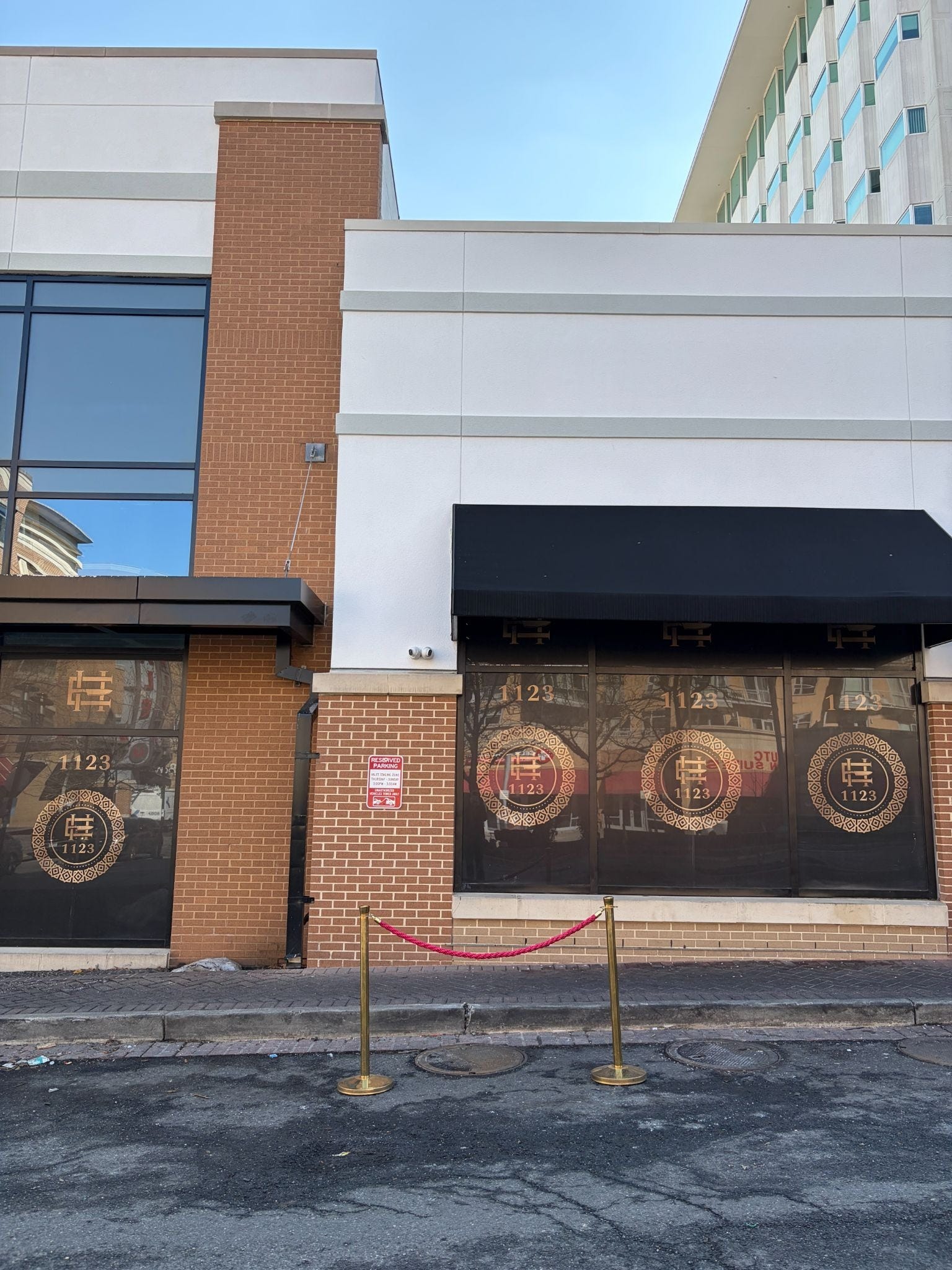
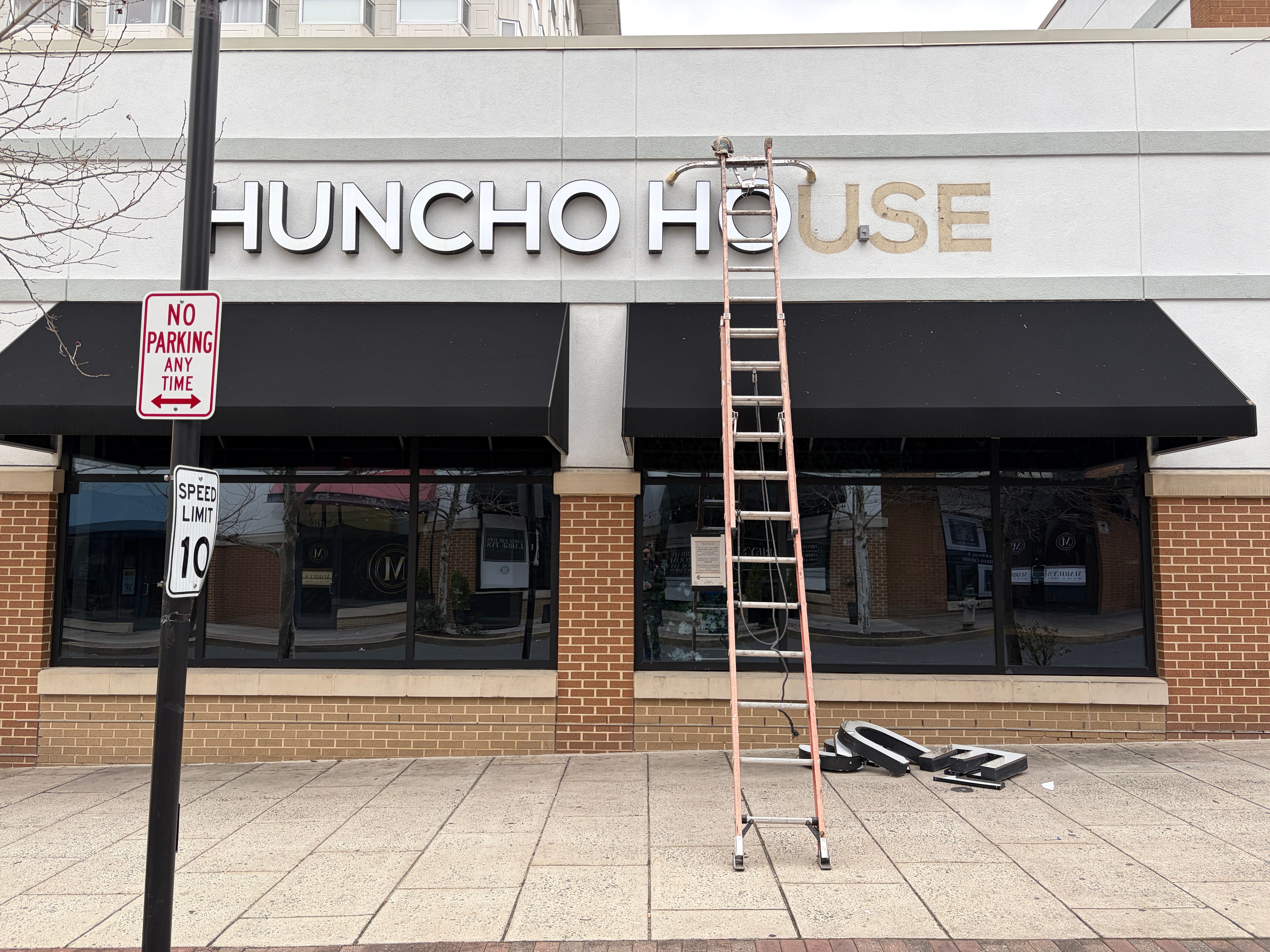
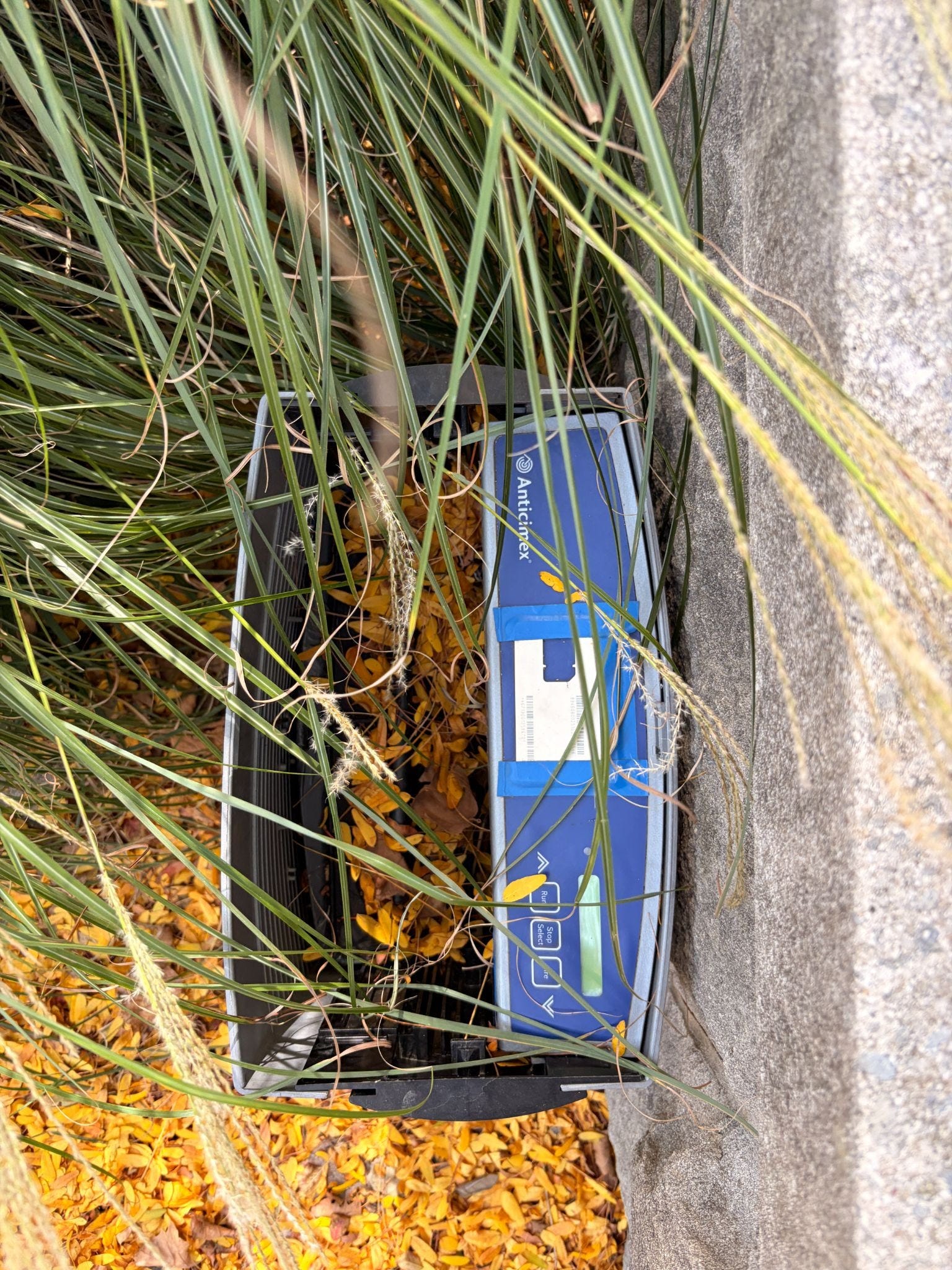
An evil magnetic field kills the birds.
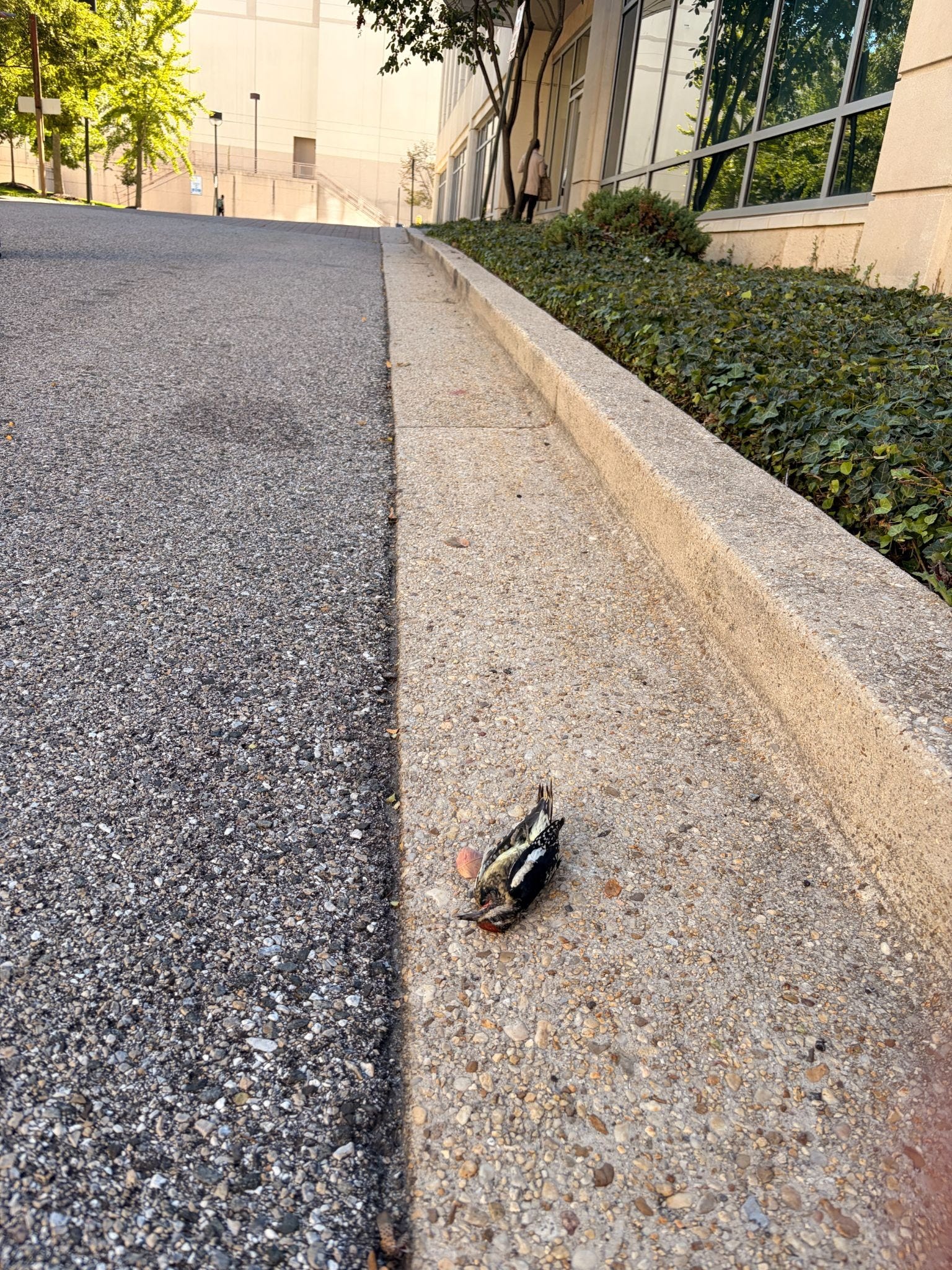
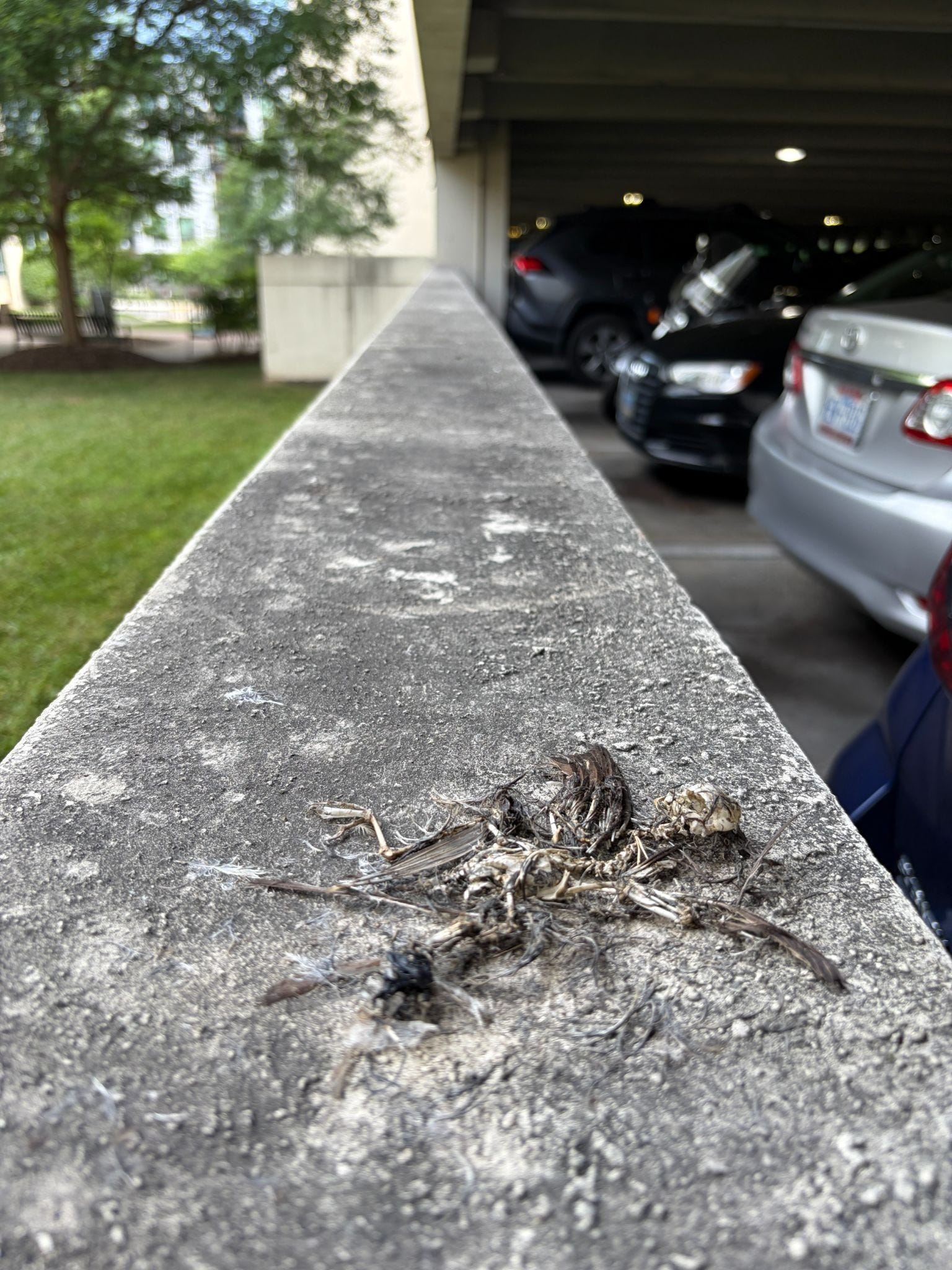
I found it distressing that I could not clearly communicate this depressing banality. The great John Ruskin argues that this is due to the nature of ugliness:
Often [...] I have put myself hard to it, vainly, to find words wherewith to tell of beautiful things; but beauty has been in the world since the world was made, and human language can make a shift, somehow, to give account of it, whereas the peculiar forces of devastation induced by modern city life have only entered the world lately; and no existing terms of language known to me are enough to describe the forms of filth, and modes of ruin, that [I found when revisiting my boyhood home. The road outside my old house is now] bordered on each side by heaps of–Hades only knows what!–mixed dust of every unclean thing that can crumble in drought, and mildew of every unclean thing that can rot or rust in damp: ashes and rags, beer-bottles and old shoes, battered pans, smashed crockery, shreds of nameless clothes, door-sweepings, floor-sweepings, kitchen garbage, back-garden sewage, old iron, rotten timber jagged with out-torn nails, cigar-ends, pipe-bowls, cinders, bones, and ordure, indescribable; and, variously kneaded into, sticking to, or fluttering foully here and there over all these,–remnants broadcast, of every manner of newspaper, advertisement or big-lettered bill, festering and flaunting out their last publicity in the pits of stinking dust and mortal slime.
Ruskin wrote passionately about how art could elevate people and make their lives more full and more holy. He feared progress. I can see why. Progress has created a landscape that has so much more ugliness than beauty. I believe living this way profoundly impoverishes us.
One day, I saw a pile of quinoa in the dirt.